Why Your Shirt Smells When You Sweat (Even Straight Out of the Wash)
The tell is that it happens fast. If a shirt smells within ten or fifteen minutes of you starting to sweat, that is not new odour developing. That is old odour being reactivated.
- A clean shirt smells within minutes because old body oils and bacteria left in the weave rehydrate when you sweat and reactivate — a fabric problem, not a hygiene one.
- Polyester and technical synthetics are the worst offenders because they hold oil, and the underarm concentrates sweat, sebum and bacteria.
- Clear the residue first: wash sooner and inside out, do not overload, dose correctly, skip conditioner on synthetics, pre-soak and run an occasional hot wash.
Why does a clean shirt smell as soon as I sweat?
Sweat itself is close to odourless. The smell comes from bacteria on skin metabolising the compounds in sweat — which is why the process needs both moisture and bacteria to run.
When you wear a shirt, three things transfer into it: sweat, sebum from your skin, and bacteria. A normal wash removes the water-soluble part of that easily. It struggles with the oils, which are not water-soluble and need either heat or the right surfactant to lift, and it does not reliably remove bacteria embedded deep in the weave at 30°C.
So the shirt comes out of the machine looking clean and smelling of detergent. Dry, it is inert. Then you put it on, you warm up, moisture arrives — and the residue that was never actually removed becomes active again.
Why is it always the same shirts?
Almost always polyester and technical synthetics, and almost always in the underarm.
Synthetic fibres are oleophilic — they attract and hold oil. Cotton holds water; polyester holds grease. Since body odour lives in the oil fraction, polyester is structurally the worst fabric for this and cotton is the best. That is the entire reason your gym tops offend and your cotton t-shirts do not.
The underarm concentrates it: more sweat, more sebum, less airflow, more layers of fabric at the seam.
What actually removes the smell from a shirt
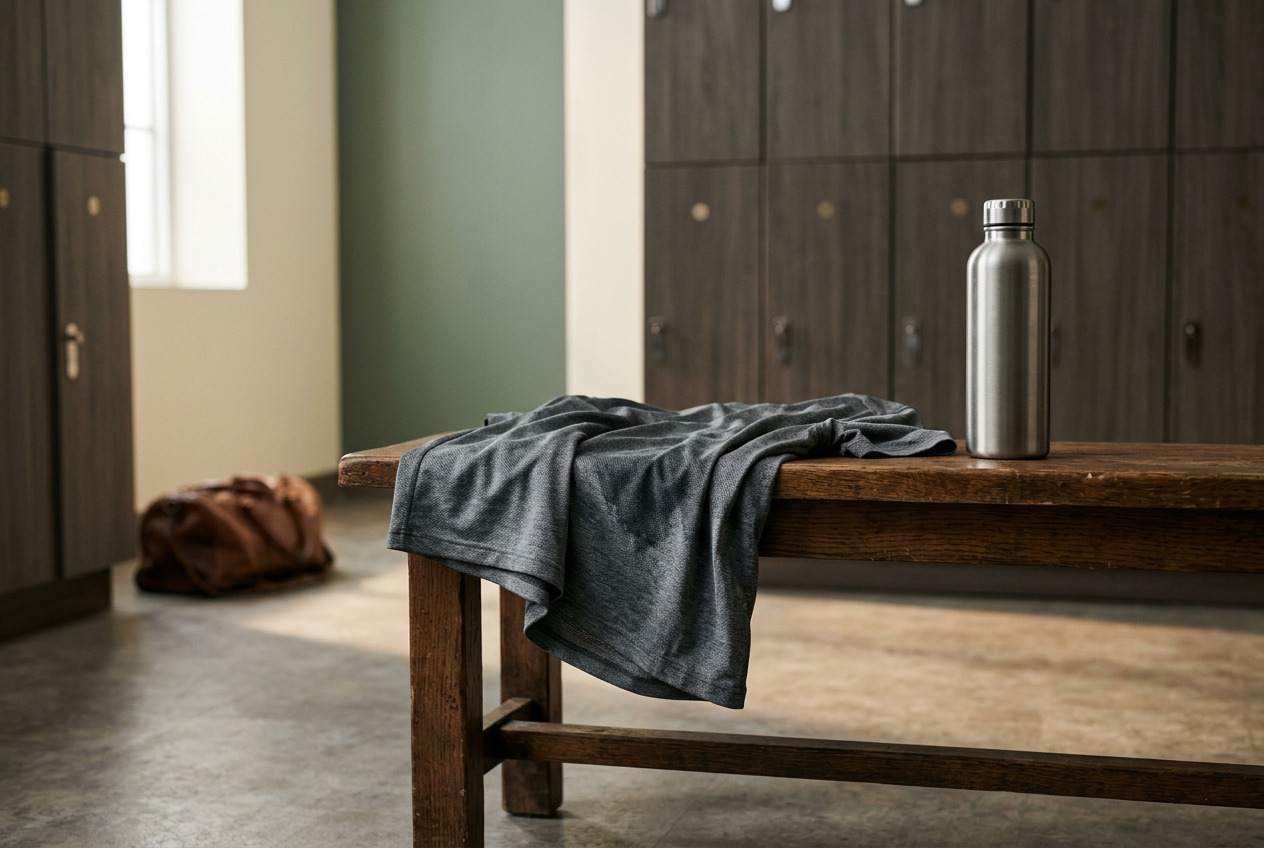
- Stop leaving damp kit in a bag. Nothing on this list matters if wet clothes spend six hours in a holdall. Get them out and hang them, even unwashed.
- Wash sooner. The longer sweat sits in a shirt, the more it embeds. Same day where you can.
- Turn the shirt inside out. The dirty face of the fabric is the inside. Washing it inside out puts the residue in direct contact with the water and detergent.
- Do not overfill the drum. Overloading is one of the most common causes of poor washing, and it hits exactly this problem — clothes need water and movement to rinse properly.
- Use enough detergent, but not more. Under-dosing leaves oils behind. Over-dosing leaves detergent behind, which builds up and traps odour. Both make it worse.
- Skip the fabric conditioner on synthetics. Conditioner deposits a coating that seals residue into technical fabric and blocks the wicking it was engineered for. On gym kit it is actively counterproductive.
- For a shirt that is already bad: pre-soak. An hour in cool water with detergent before the wash, agitated once or twice, does more than any single cycle setting.
- Then run one hot wash to reset it. If the fabric allows it — check the label — a single 60°C wash clears accumulated oils that months of 30°C never touched. Do this occasionally, not routinely.
Does washing at 30°C cause the problem?
It contributes, and it is still the right default. Cool washing is better for fabric, for colour and for energy use, and it handles ordinary laundry perfectly well. The trade-off is that it is less effective on body oils, which accumulate slowly over months.
The practical answer is not to abandon 30°C. It is to run an occasional hot wash on the items that need it, and a hot empty maintenance cycle on the machine itself every month or two — because a machine with a biofilm in the drum and drawer is re-contaminating everything you put through it. If your whole wash smells musty rather than just your gym kit, that is the machine, not the clothes. We covered it in why clothes don't smell fresh after washing.
Will a stronger-smelling detergent fix it?
No, and this is worth being straight about. Fragrance sitting on top of reactivated bacterial odour produces something worse than either — that specific unpleasant combination of perfume and sweat that everyone recognises and nobody can name.
Fragrance is what you add after the fabric is genuinely clean, not instead of cleaning it. Get the residue out first with the routine above, then choose a scent you actually want to wear all day.
Element's detergent sheets dissolve in seconds at 30°C so there is no undissolved residue left in the drum, and they come in three scents built to be worn rather than to mask. For gym kit specifically, use the sheets and leave the conditioner out — more on that in sports detergent and what actually works on sportswear.
Related reading: how to get sweat smell out of clothes · why some clothes smell stronger than others.
Common questions
Why does my shirt smell when I sweat even though it is clean?
Because body oils and bacteria from previous wears are still in the fabric. A 30C wash removes the water-soluble part of sweat easily but struggles with sebum, which is not water-soluble. That residue is odourless while dry, then rehydrates when you sweat and the bacteria become active again, so the smell returns within minutes.
Why do polyester shirts smell more than cotton?
Polyester is oleophilic, meaning it attracts and holds oil, while cotton holds water. Body odour lives in the oil fraction of sweat, so synthetic fibres retain the compounds responsible for the smell far more stubbornly than natural ones. This is why gym tops develop a persistent smell that cotton t-shirts generally do not.
How do you get sweat smell out of a shirt permanently?
Soak the shirt in cool water with detergent for an hour, agitating occasionally, then wash it inside out in a drum that is not overloaded, using the correct detergent dose and no fabric conditioner. If the care label allows it, follow with a single 60C wash to clear accumulated oils. Run a hot empty maintenance cycle on the machine every month or two as well.
Should you use fabric softener on sweaty gym clothes?
No. Fabric conditioner deposits a thin coating on the fibres which seals residue into technical fabric and blocks the moisture-wicking the garment was designed for. On synthetic sportswear it makes the odour problem worse rather than better.
Will a stronger smelling detergent stop my shirt smelling of sweat?
No. Fragrance layered over reactivated bacterial odour produces a worse result than either on its own. The residue has to be removed first through correct dosing, washing inside out, avoiding overloading and an occasional hot wash. Fragrance is what you add once the fabric is genuinely clean.