Detergent Sheets vs Liquid vs Pods vs Powder: An Honest Comparison
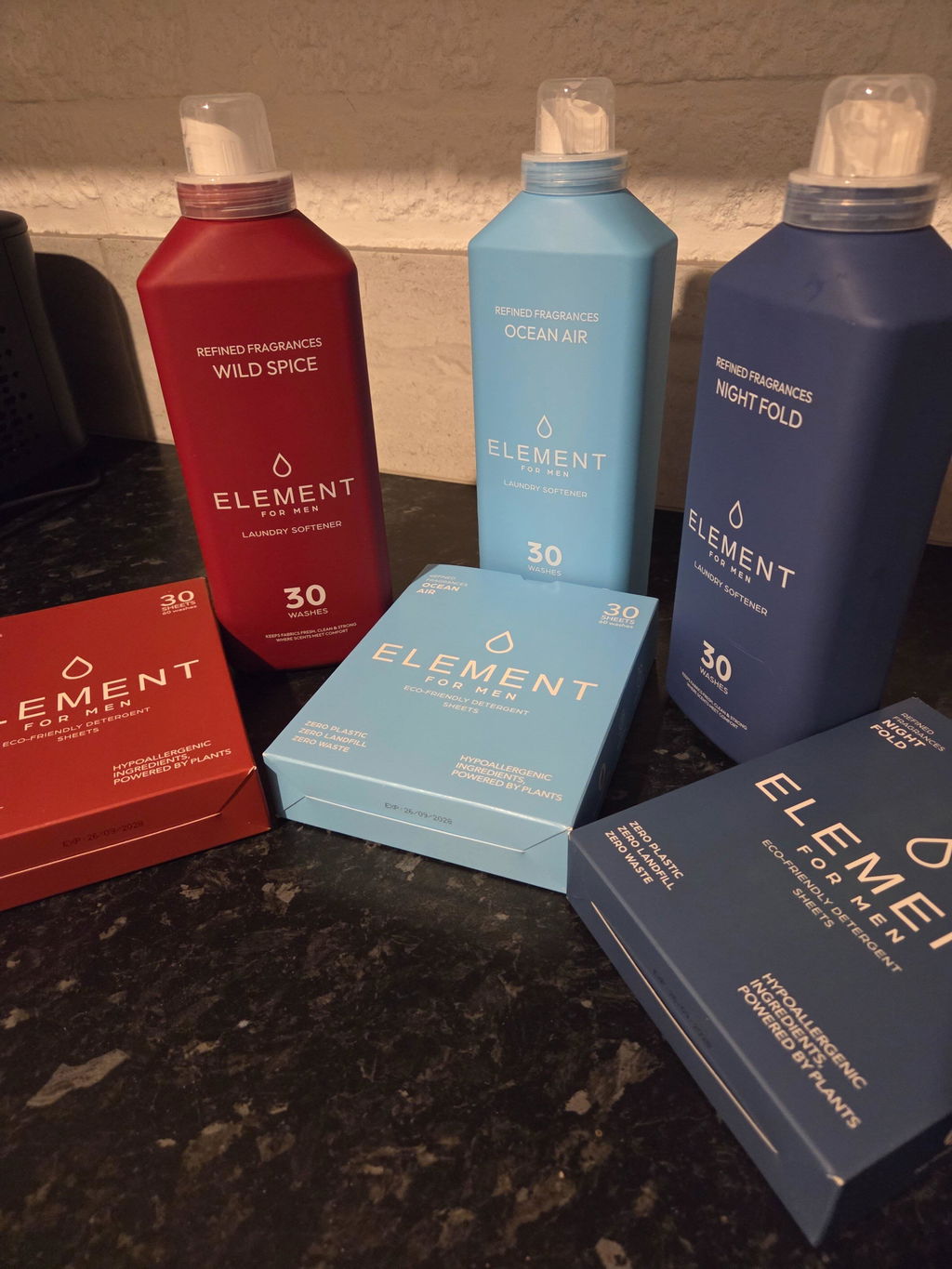
Most format comparisons are written by someone selling one of the four. This one is too, so here is the bias declared up front: Element makes detergent sheets. What follows tries to be the version you would get from someone who did not.
The comparison
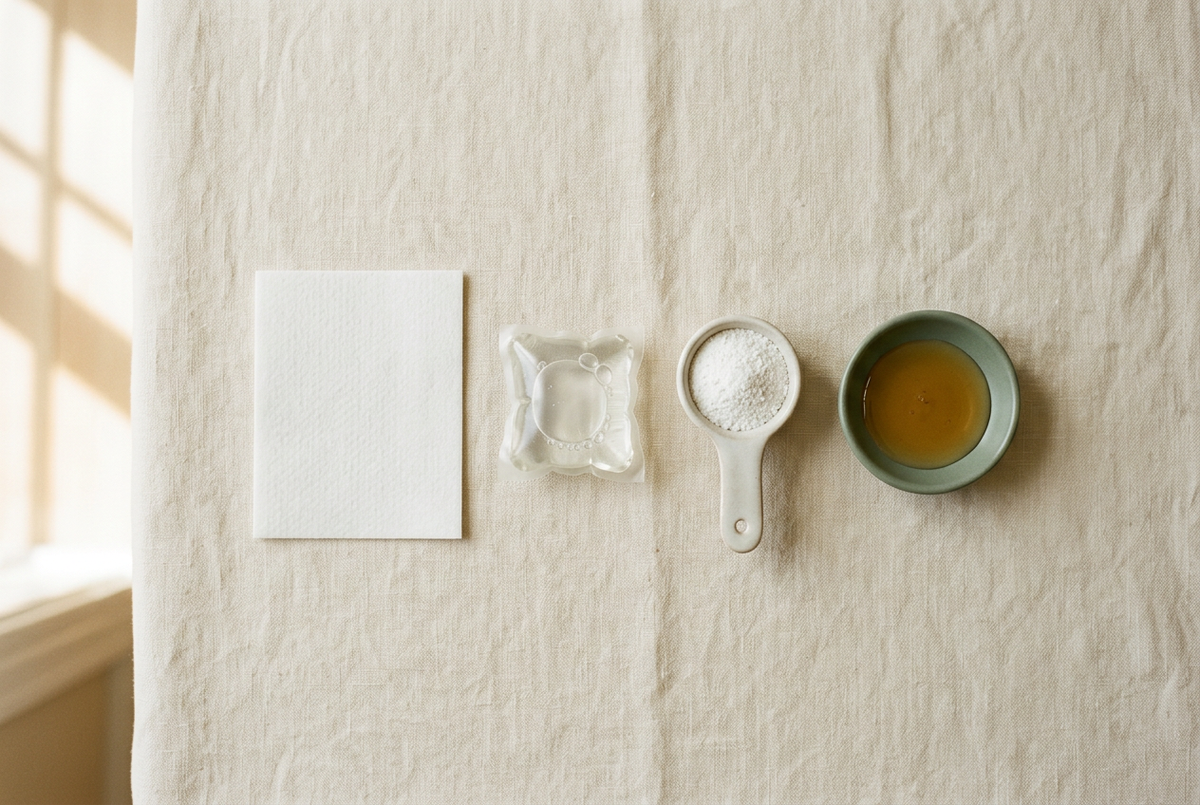
| Sheets | Liquid | Pods | Powder | |
|---|---|---|---|---|
| Everyday 30°C wash | Good | Good | Good | Good |
| Heavy soiling, work clothing | Weakest — dose is fixed | Strong — dose freely | Limited — add a second pod | Strongest |
| Whites and brightening | Adequate | Adequate | Adequate | Best — usually contains oxygen bleach |
| Dosing accuracy | Best — pre-dosed, splittable | Worst — most people over-pour | Good, but not adjustable | Fair — needs a scoop |
| Cost per wash | Mid to high | Mid | Highest | Lowest |
| Packaging | 100% recyclable cardboard, no plastic bottle | Plastic jug | Plastic tub | Cardboard or plastic tub |
| Storage | Slimmest by far | Bulky, can leak | Compact | Bulky, absorbs damp |
| Travel and small homes | Best | Poor | Good | Poor |
| Household safety | Good | Good | Worst — a known child-safety risk | Good |
Powder
Underrated, and the format most likely to be right if performance and price are your only criteria. Powder is typically the cheapest per wash, and because it usually contains an oxygen bleach it handles whites and heavy soiling better than the other three. It also stores indefinitely.
Against it: it needs measuring, it can clump in a damp cupboard, it sometimes leaves residue on dark fabric in cold washes, and the boxes are bulky. If you have a garage or a utility room and a family's worth of washing, powder is a genuinely sensible answer.
Liquid
The most flexible. You can dose up for a filthy load, dose down for a small one, and use it neat as a pre-treat on a stain, which no other format allows. It also dissolves reliably at any temperature.
Against it: it is mostly water, so you are paying to ship and store that water in a rigid plastic jug. And the flexibility cuts both ways — the majority of people over-pour, which wastes product and leaves residue in fabric and in the machine.
Pods
Convenient and consistent, and the most expensive per wash of the four. The dose is fixed and genuinely not adjustable — a small load gets a full dose whether it needs one or not.
The serious mark against pods is safety: concentrated liquid in a brightly coloured, soft, water-soluble wrapper is a recognised ingestion hazard for young children, which is why the packaging carries the warnings it does. If there are small children in the house, this is a real consideration rather than a theoretical one.
Sheets
What they are good at: dosing, storage, packaging and weight. A sheet is a fixed dose you can halve, it takes almost no cupboard space, it arrives in a slim box that fits in a drawer rather than a bottle, and because the water has been removed the weight shipped per wash is far lower. For a flat, for travel, or for anyone who finds the detergent cupboard irritating, the format solves a real problem.
Where they lose: heavily soiled work clothing. A sheet is a fixed dose, and while you can add a second one, you are then paying a premium format price for a job powder does better and cheaper. They are also generally more expensive per wash than powder.
So which should you buy?
Heavy soiling, whites, big household, tight budget: powder.
You want to control the dose and pre-treat stains: liquid.
You want zero thought and no children in the house: pods.
Small home, little storage, you travel, you air dry, and you care how your clothes smell: sheets.
That last clause is the honest reason most people choose Element rather than the cleaning claim. The sheets are built around fragrance — three scents with an actual top, heart and base — and the matching conditioner is what makes the scent last, because it lands in the final rinse rather than being washed out. If that is not what you are optimising for, one of the other three formats is probably the better buy, and we would rather say so.
Related reading: laundry sheets vs liquid in depth · bio vs non-bio · choosing a conditioner that lasts.