How to Get the Smell Out of Clothes Without Washing Them
Useful for tailoring, wool, leather, coats and anything you cannot put in a machine — and for the shirt you need in an hour.
- Airing a garment outdoors for several hours is the single most effective no-wash method, and it costs nothing.
- Match the method to the smell: steam for smoke and staleness, diluted white vinegar for sweat, bicarbonate of soda for damp and storage odours.
- Freezing doesn't work — it only makes bacteria dormant, so the smell returns once the garment warms up.
Does airing clothes actually remove smell?
Yes, and it is genuinely the best of these methods. Most clothing odour is volatile compounds sitting in the fabric. Given moving air, time and low humidity, they leave on their own.
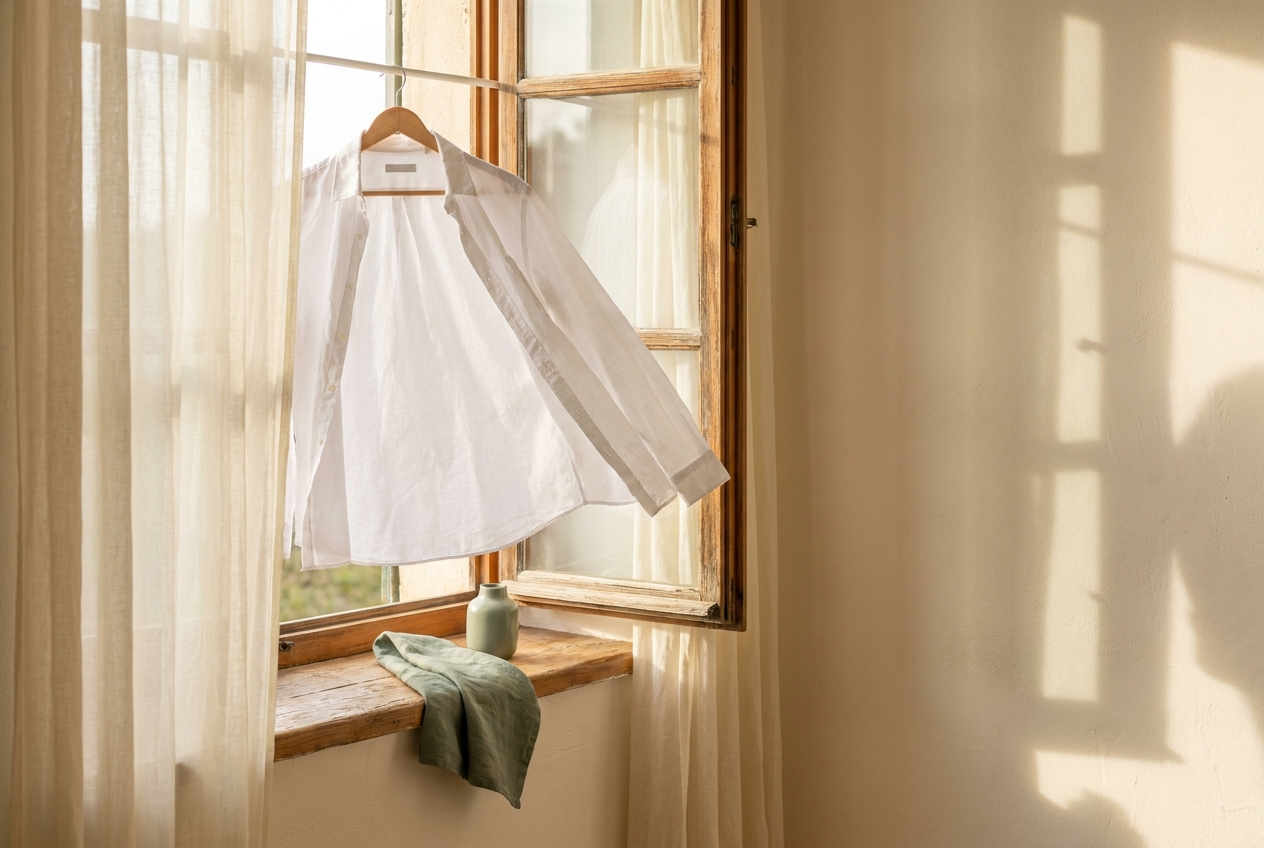
Outdoors, in shade, on a breezy day, for four to six hours. Indoors works but takes considerably longer and needs a window open. Turn the garment inside out so the loaded surface faces the air, and hang it with space around it rather than pressed against other clothes.
It will not remove heavy smoke or anything oil-based. For everything else, it does more than any product.
Does steam get smells out of clothes?
Very effectively, especially for smoke, cooking smells and general staleness. Steam opens the fibres and carries the trapped compounds out with the moisture as it evaporates.
A handheld garment steamer is best. The bathroom version works too: hang the garment in the bathroom, run the shower hot with the door shut for ten minutes, then move the garment somewhere dry and airy to finish. The second step matters — leaving it in a humid bathroom afterwards just swaps one smell for a damp one.
Check the label first. Steam is unsuitable for some structured tailoring, and for certain synthetics and delicate silks.
Does vinegar get the smell out of clothes?
Yes, for the right smells. White vinegar is mildly acidic, and it neutralises the alkaline compounds behind a lot of body and sweat odour — which is exactly why it works on gym kit and armpits and does very little on smoke.
Mix one part white vinegar to four parts water in a spray bottle. Mist lightly — not soak — and let it dry fully in air. The vinegar smell disappears completely as it evaporates.
Test on a hidden seam first, and do not use it on silk, acetate or anything with a specialist finish.
Does bicarbonate of soda work on clothing smells?
Yes, and it is the best option for damp, musty, old-wardrobe and storage smells.
Two methods. Sprinkle bicarb directly onto the garment, leave it for several hours, then brush and shake it out thoroughly. Or — better for anything delicate — seal the garment in a bag with an open bowl of bicarb overnight and let it absorb without ever touching the fabric.
It works by absorbing odour compounds rather than masking them, which is why it needs contact time. An hour is not enough.
Does freezing clothes remove smell?
No. This is the most persistent myth in this whole subject.
Freezing makes odour-causing bacteria dormant. It does not kill them, and it does not remove the body oils and residue they feed on. The garment smells better while it is cold, and the smell returns within hours of it warming up and being worn.
Some people report success with denim, which is really the airing that happens in a cold, dry, ventilated freezer doing the work — not the temperature.
Which method for which smell?
| Smell | Best method |
|---|---|
| Sweat and body odour | Diluted white vinegar mist, then air outdoors |
| Smoke and cooking | Steam, then air for several hours |
| Damp and musty | Bicarbonate of soda overnight, then air in dry moving air |
| Old house or long storage | Bicarb overnight plus a full day outdoors |
| Someone else's fragrance | Airing only. Nothing removes it faster and sprays make it worse |
| Mildew | None of the above. This needs a proper wash — mildew is living growth |
What not to do
Do not spray fabric freshener over it. It adds a second fragrance on top of the first and fades within the hour, leaving you with the original smell plus a stale perfume note.
Do not spray cologne onto a smelly garment. Same problem, more expensively, and fragrance can stain.
Do not iron it. Heat sets some odour compounds into the fibre rather than removing them.
When you just have to wash it
If the smell is mildew, if it comes back within an hour of wearing, or if it is coming from the underarm of a synthetic shirt, none of the above will fix it. That is residue embedded in the weave, and it needs a proper wash — the routine for that is here.
When you do wash it, the point of a fragranced detergent is to replace a smell rather than cover one. Element's detergent sheets dissolve in seconds at 30°C, in three scents built to be worn rather than to mask. For the wool and tailoring above, use a dedicated wool wash — enzyme detergents degrade protein fibres.
Related reading: how to get sweat smell out of clothes · why clothes don't smell fresh after washing · how long cologne lasts on clothes.
Common questions
Does airing actually get smells out of clothes?
Yes — it's the most effective no-wash method. Turn the garment inside out and hang it outdoors in shade with space around it for four to six hours; moving air, time and low humidity carry most odour compounds away. It won't shift heavy smoke or oil-based smells.
Does freezing clothes remove the smell?
No. Freezing only makes odour-causing bacteria dormant rather than killing them, and it doesn't remove the body oils they feed on, so the smell returns within hours of the garment warming up.
Does white vinegar work on clothing odour?
Yes, for sweat and body odour. White vinegar is mildly acidic and neutralises the alkaline compounds behind most body smells. Mix one part vinegar to four parts water, mist lightly rather than soak, and let it dry fully in air. It does little for smoke.