How to Wash a Fleece Without It Pilling
Inside out, at 30°C, on a short cycle, with soft items only and no fabric conditioner. Then air dry it. Fleece pills from rubbing, so what it shares the drum with matters more than what you wash it in.
A fleece is knitted polyester with its surface deliberately cut and brushed up into a pile. Every fibre end in that pile is already exposed. Pilling is those loose ends abrading against something harder and tangling into balls, which makes the load you choose the decision that matters.
How do you wash a fleece?
Zip everything up, turn it inside out and wash it at 30°C on a short synthetics or gentle cycle with a moderate spin. Load it with soft things only: other fleeces, t-shirts, sweatshirts. Keep it away from denim, towels, zips, Velcro and anything with a hook on it.
Inside out matters because the pile you care about is on the outside, and the drum wall and the rest of the load are what wear it down.
Use a normal dose. Extra detergent does not clean a fleece better, and the surplus leaves residue in the pile, which is exactly where odour clings.
| Step | Do this | Why |
|---|---|---|
| Load | Soft items only, no denim or towels | Pilling is abrasion, not chemistry |
| Cycle | 30°C, short synthetics or gentle | Less time tumbling means less abrasion |
| Spin | Moderate | A hard spin creases and compresses the pile |
| Conditioner | None | The film mats the pile and blocks wicking |
| Drying | Air dry, off the radiator | Heat glazes polyester permanently |
Scroll to see the full table
Why does a fleece pill, and can you fix it?
Because the pile is made of cut fibre ends, and cut ends migrate. Rubbing works them loose from the knit, they tangle with their neighbours, and the tangle balls up. It is mechanical, and it is not reversible.
You can take pills off with a fabric shaver, or with a razor drawn across a taut section, and the garment will look considerably better. It is tidying, not repair. Every pill you remove is fibre the fleece no longer has, so the pile thins slightly each time you do it.
A pill is fibre that has already left the fabric.
Knitwear bobbles by a related mechanism, for a different reason: why blended jumpers bobble more than pure wool.
Should you use fabric conditioner on a fleece?
No, and this is the place we argue against our own product. Conditioner works by leaving a thin cationic film on the fibre, and on cotton that film is the point: it is what makes a towel or a shirt feel soft.
On a fleece the same film does 2 unwanted things. It mats the raised pile down, and that loft is what makes a fleece warm. And it makes the fibre less willing to move moisture, which is the job a fleece is doing when you are actually working in it.
This holds for towels, microfibre cloths and technical base layers too. Anything whose job is to move water does not want a water-repelling film sitting on it.
Can you tumble dry a fleece?
Better not. Polyester is a thermoplastic, which means it softens with heat, and a softened fibre that gets pressed flat stays flat. The shiny, glazed patches on an old fleece are pile that melted very slightly and then set that way.
A fleece hardly needs a dryer in any case. It holds very little water, so it dries on a hanger in a few hours. Keep it off radiators and out of direct sun for the same reason: the damage is heat, wherever the heat comes from.
Why does a fleece still smell when it comes out clean?
Because polyester is oleophilic — it repels water and attracts oil. Body oil sinks into the fibre rather than sitting on the surface, so water and detergent have to go in after it. The bacteria that produce the smell live in that oil, and when the garment dries they go dormant rather than leaving.
Then you put it on, and body heat and moisture wake them up. The fleece smells again within the hour and nothing about the wash looked wrong at the time. The gym kit and odour hub covers the same mechanism on training kit.
The answer is a full dose, a load with room to move and enough cycle time — not a hotter wash, and not more fragrance on top.
How often should you wash a fleece?
Less often than a base layer, more often than a coat. A fleece worn over a t-shirt a few hours a week will go several wears. A fleece worn next to the skin, or worn to train in, is a 1-wear garment, because of the oil rather than the dirt.
In between, air it properly: hang it somewhere with moving air rather than folding it warm into a drawer.
This will not work if the fleece is already pilled and flattened. Washing it correctly from now on stops it getting worse. It does not bring the pile back.
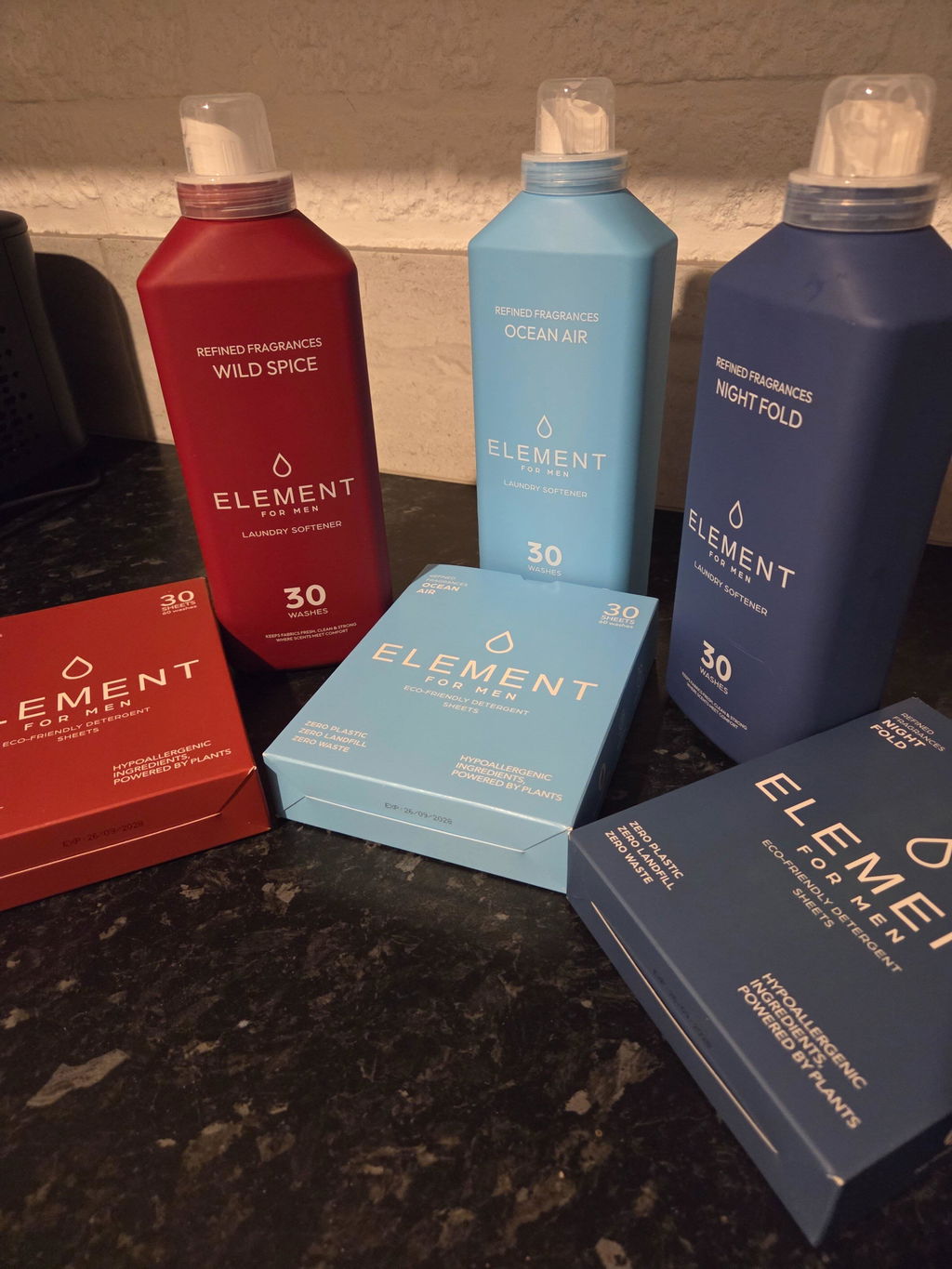
A fleece is an ordinary 30°C wash, which is what our sheets are built for. 1 sheet into the empty drum, then the fleece, inside out, with soft things only. 30 sheets — 30 washes, up to 60 if you halve them.
What we would not do is put our softener in with it. Save the conditioner for cotton and bedding, where the film is the reason you bought it.
See the detergent sheetsKeep reading
Written and fact-checked by the Element for Men editorial team. General guidance only — always follow the care label on the garment.