Fabric care, by fibre
Most laundry mistakes are a mismatch between what a fabric needs and what the machine is doing to it. Below is what each fibre actually requires, how to read a UK care label properly, and the practical questions that come up in British homes — which are not the same as American ones.
Clothes worth keeping: four routines to use now
Start with the garment care label, then choose the routine by fabric and use — not by habit.
Shirts
Undo collar and cuff buttons, turn the shirt inside out, leave room in the drum and remove it promptly. Hang while damp to reduce creasing.
Denim
Turn denim inside out, choose a cold gentle cycle and wash only when needed. Air dry away from strong direct sun.
Bedding
Follow the care label, leave enough room for the duvet cover to move and avoid packing the drum.
Gym kit
Turn technical kit inside out, wash after wear and follow the care label. Skip fabric softener on technical and moisture-wicking fabrics.
Wool and cashmere
Use a dedicated wool wash, not Element. Our sheets are biological, the enzymes in them break down protein, and wool and cashmere are protein. Follow the care label.
Care labels
How do I read a UK care label?
UK labels follow the GINETEX symbol system, standardised as BS EN ISO 3758. Five symbols, always in the same order. Washtub — washing, the number is maximum temperature. Triangle — bleaching. Square — drying. Iron — ironing, dots are temperature. Circle — professional cleaning. American guides describe the ASTM system, which is different; do not use them.
What do the bars under the washtub mean?
Mechanical action, not temperature — which almost everyone gets wrong. One bar means a mild, synthetics-level action. Two bars mean very mild, wool-level action. So a washtub reading 40 with two bars is not asking for a cooler wash; it is asking for a gentler one.
What do the dots in the iron symbol mean?
Maximum soleplate temperature. One dot is low, around 110°C — synthetics and elastane. Two dots is medium, around 150°C — wool and polyester blends. Three dots is high, around 200°C — cotton and linen. A cross means do not iron at all.
What do the tumble dry symbols mean?
A circle inside a square means tumble drying is allowed. One dot is low heat, defined as a maximum 60°C exhaust; two dots is normal, at 80°C. A cross through the circle means do not tumble dry. A cross through the square itself means do not dry by any method — a different and stronger instruction.
What does the circle with a P or an F mean?
Professional dry cleaning, and the letter tells the cleaner which solvent to use. W means professional wet cleaning. An underline means a gentler process; two underlines means very gentle. A crossed-out P or F means do not dry clean; a crossed-out W means do not professionally wet clean. Those are different instructions and a garment can carry one without the other.
Does the care label tell me the best way to wash something?
No — and this is the most useful thing to understand about labels. A care label is the manufacturer's guarantee of what the garment will survive, not a recommendation of what will clean it. A label saying 30°C means 30°C will not damage it. It does not mean 30°C will get the sebum out. The gap between those two things is where most laundry disappointment lives.
What if there is no care label?
Identify the fibre by feel and behaviour, and default conservatively: 30°C, gentle cycle, no tumble drying, air dry flat. If you genuinely cannot tell, test a hidden seam with water and mild detergent first. Assume the most delicate plausible fibre rather than the toughest.
By fibre
How should I wash cotton?
Cotton is forgiving — strong when wet, tolerant of heat and agitation. 30°C for everyday, 40°C to 60°C when there is a real hygiene need. Its weakness is shrinkage: mechanical action and heat let tensioned fibres relax back, mostly in the first wash. Pre-shrunk cotton has had that done for you.
How should I wash wool?
Cold or barely warm, wool cycle, wool detergent, and minimal handling. Wool felts when heat, moisture and agitation combine — the scales on the fibre surface interlock and will not come apart, which is why a shrunk jumper never recovers. Never tumble dry. Dry flat, because wet wool stretches badly under its own weight.
How should I wash linen?
Warm, gentle, and do not over-dry. Linen is strong but the fibres are stiff and brittle when dry, so hard creasing at the same point eventually cuts them. Take it out of the machine damp and hang it — it softens with every wash, which is the whole appeal.
How should I wash silk?
Hand wash cool with a pH-neutral detergent, or a silk cycle if you trust your machine. Silk is protein, which means two things: never use an enzyme detergent with protease in it — it will literally digest the fibre — and never use chlorine bleach. Do not wring. Roll in a towel and dry away from direct sun.
How should I wash polyester and performance fabric?
40°C on a synthetic cycle, inside out, extra rinse, no fabric softener. Polyester holds oil, so it needs the warmth to shift sebum, and it needs the rinse to clear it. Softener blocks the wicking channels. Low heat only for drying — polyester melts, and a hot dryer permanently glazes the fibre.
How should I wash denim?
Inside out, cold, gentle, and far less often than you think. Cold protects indigo, which sits on the surface of the yarn rather than through it. Wash rarely and air rather than laundering out of habit — most denim is washed more than it needs and fades for no reason.
How should I wash a suit or tailoring?
Do not put it in a machine. Structured tailoring contains interfacing, canvas and padding that shrink at different rates from the shell, so a machine wash destroys the shape permanently. Brush it after wearing, air it, spot-treat, and dry clean sparingly — dry cleaning is hard on fabric too.
How should I wash a down jacket?
Down-specific wash, gentle cycle, several rinses, and no softener. Then tumble dry low with dryer balls for a long time. The drying is the whole job: down clumps when wet and only regains loft through repeated mechanical separation. A down jacket dried on a line stays flat and stops insulating.
How should I wash waterproofs?
Technical cleaner, no detergent, no softener, and no fabric conditioner ever. Ordinary detergent leaves surfactant residue that actively attracts water and kills the DWR finish. After washing, tumble low or warm-iron through a cloth if the label allows — heat reactivates the DWR.
How should I wash towels?
Hot enough for the label, no softener, and do not over-fill the drum. Towels need water volume to rinse properly and they are the load people most reliably pack too tightly. Skip the softener permanently — it is the reason towels stop absorbing.
How should I wash bedding?
Weekly, 40°C to 60°C depending on fabric and label. Bedding takes a nightly sebum load and it accumulates invisibly. Do not wash a duvet cover with a packed drum — it billows, traps everything else inside it, and nothing gets cleaned.
How should I wash a shirt so it lasts?
40°C, do not overload, remove promptly and hang while damp. Undo the collar and cuff buttons. Most shirt wear comes from the dryer and from over-ironing, not from washing — hang it damp and you may not need to iron it at all.
Practical UK questions
How full should I fill my washing machine?
About three-quarters. You should be able to lay a flat hand on top of the load with room to spare. Fabric has to move for water and detergent to reach it, and for rinsing to clear it. A packed drum cleans badly and, more importantly, rinses badly — which is where residue, stiffness and smell come from.
Why does drying indoors make clothes smell?
Slow drying gives microbial growth time to establish in damp fabric. UK housing makes this common — tumble dryers are much less universal here than in the US, and indoor drying in an unventilated room in winter is normal. Airflow matters more than heat: an open window and a fan beat a warm, closed room.
Should I leave the washing machine door open?
Yes. A sealed, wet drum is where biofilm establishes, and biofilm is the source of most machine smells. Leave the door and the dispenser drawer ajar between washes so everything dries. It is the single easiest maintenance habit there is.
How often should I clean my washing machine?
Monthly, empty, at 60°C or above. The temperature is the point — a maintenance wash at 30°C achieves nothing. Wipe the door seal including the fold underneath, pull the drawer and rinse it, and check the filter.
Does washing at 30°C damage clothes less?
Yes — lower temperature means less dye loss, less shrinkage and less fibre stress, and it is right for the bulk of your wash. The trade is that 30°C does not shift sebum well, so it fails on heavily-worn synthetics. Use it as the default, not as a rule.
Does hard water damage clothes?
Over time, yes. Calcium and magnesium form insoluble deposits in the fibre, which is what makes fabric feel stiff and look grey in hard-water areas. They also consume part of your detergent dose before it can lift any soil. If you are in a chalk or limestone area — London, the South East, East Anglia, parts of the Midlands — this is happening to your wardrobe quietly.
How do I know how hard my water is?
Your water company publishes hardness by postcode on its website, and that is the number to use — it is local, specific and authoritative. Be wary of the national percentages that circulate online; they trace back to water-softener retailers citing each other rather than to any regulator.
Do I need to use more detergent in a hard-water area?
Effectively yes, and most product guidance says so on the box. Hardness ions consume surfactant before it can clean, so the same dose does less work in Kent than in Glasgow. Check the dosing panel — nearly every detergent gives separate soft, medium and hard water instructions, and nearly everyone ignores them.
Should I separate my laundry?
By colour for the first few washes of anything new and dark, always. By fabric type, yes — because temperature and cycle should match the fibre, and a mixed load forces you to wash everything at the gentlest common denominator. Towels and bedding separately, because they need water volume.
Does washing clothes inside out actually help?
Yes, for two reasons. The soil is on the inside surface, so washing inside out puts it in direct contact with water and detergent. And the outside surface — the one with the print, the finish and the colour you care about — is protected from abrasion against the drum.
Why do my clothes come out creased?
Usually a spin that is too fast for the fabric, a drum that is too full, or leaving the load sitting after the cycle ends. Reduce the spin speed for shirts and anything you would rather not iron, and get the load out while it is still damp.
Does tumble drying ruin clothes?
It ages them faster than anything else you do. The lint in the filter is your clothes — fibre abraded off by heat and tumbling. Heat also permanently sets stains, shrinks cotton, and glazes synthetics. Air drying is slower and clothes last visibly longer.
How do I stop clothes shrinking?
Match the temperature to the fibre, and keep them out of the dryer. Most shrinkage is heat plus agitation letting tensioned fibres relax — and in wool, felting, which is irreversible. Cotton shrinks most on its first hot wash, which is why the first wash of a new garment is the one to be careful with.
Can I un-shrink a wool jumper?
Not really. Felted wool has physically interlocked its surface scales and there is no undoing that. Soaking in cool water with hair conditioner and gently stretching while damp recovers a little size on a mildly-shrunk piece. Manage expectations — prevention is the only real answer.
How do I stop bobbling and pilling?
Pilling is short fibres working loose and tangling under abrasion, so it is a friction problem. Wash inside out, on a gentle cycle, in a drum that is not packed, and separate rough fabrics like denim from knitwear. A fabric shaver removes existing pills without damaging the garment.
How often should I actually wash things?
Underwear, socks and gym kit every wear. Shirts every wear — they take a direct sebum load. Jumpers every few wears, or when they need it; wool often just needs airing. Jeans rarely. Bedding weekly. Towels every few uses, dried fully between. Over-washing wears clothes out faster than wearing them does.
Should I wash new clothes before wearing them?
Yes. New garments carry manufacturing residues, sizing finishes and excess surface dye, and they have been handled by an unknown number of people. Wash new darks separately for the first few cycles — that is when loose dye comes off and finds your white shirts.
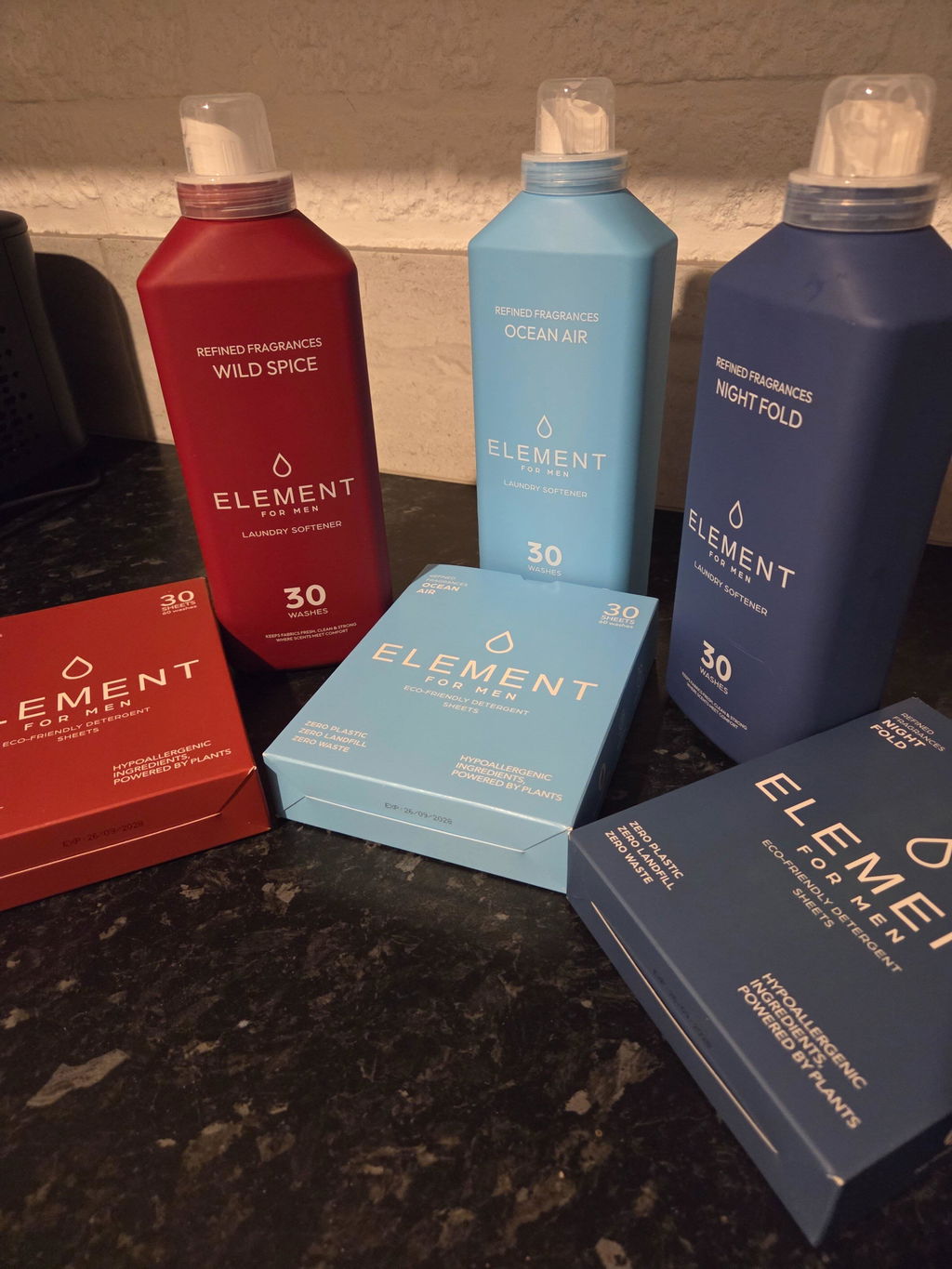
Does Element work on all these fabrics?
Not all of them, and it is worth being precise about which. Our sheets are biological, so wool, silk and cashmere need a dedicated wool wash rather than ours — enzymes break down protein, and those three fibres are protein. Waterproofs need a technical cleaner and down needs a down wash. And keep our softener away from activewear, towels and technical kit. For everything else, match the temperature and cycle to the fibre and our sheets are a general-purpose detergent like any other.
Related: all laundry questions answered · stain removal · gym kit and odour