Fabric Softener or Detergent: Which Does More for How Clothes Smell?
Ask most men which one makes their laundry smell good and they will point at the detergent. It is a fair guess. It is also only half right.
- Detergent is designed to rinse away, so most of its fragrance leaves with the water — it delivers the smell of clean.
- Fabric conditioner leaves a fine layer on the fibre that gives fragrance something to cling to and releases it slowly over hours.
- They are not rivals: detergent sets how clean the base is, conditioner decides how long the good part lasts, and matching the two scents helps.
What does detergent do for how clothes smell?
Its real job is to lift out the things that make clothes smell bad: sweat, body oils, the faint sourness that lives in a gym top. A good detergent leaves fabric genuinely clean, and clean has a scent of its own — bright, neutral, uncomplicated.
Most detergents also carry fragrance, so you get a pleasant hit as you unload the machine. But detergent is designed to rinse away. That is the point of it. Which means much of that scent goes down the drain with the dirt, and what is left sits on the surface of the fibre with nothing to hold it.
Strong smell out of the machine. Not much of it by teatime.
What does fabric conditioner do that detergent cannot?
Conditioner works the opposite way round. Instead of rinsing clean, it leaves a fine conditioning layer on the fibres. That layer relaxes the fabric — the soft part — but it does something cleverer too: it gives fragrance somewhere to cling. Scent held in that layer releases slowly, over hours, as you move and the fabric warms.
It is the same reason a fragrance lasts longer on moisturised skin than on dry skin. A surface that holds a little oil holds scent. Bare fibre does not.
So if detergent is the top note you catch at the machine, conditioner is the dry-down — the part still there when someone stands close to you at 4pm.
So which does more?
It depends what you mean by more.
For getting clothes properly clean, detergent does more — no contest. That is its job, and scent that is masking a bad wash is a losing game.
But for how your clothes smell to other people, hours later, conditioner does the heavy lifting. It is the layer that turns a nice-smelling wash into one that lasts.
The honest answer is that they are not rivals. They are two halves of the same result. Detergent decides how clean the base is; conditioner decides how long the good part sticks around. Skip either and you feel it — flat fabric, or a scent gone by mid-morning.
Myth, busted: “Conditioner is just for softness.” It does soften — but that same conditioning layer is the single biggest reason one wash still smells fresh at the end of the day and another smells of nothing by 10am. Softness is the feeling; lasting scent is the quiet payoff.
When should you not use fabric conditioner?
On towels and on technical sportswear. The conditioning layer that holds fragrance also blocks absorbency in towelling and the moisture-wicking that gym kit is engineered for. On those two, use detergent alone — more on sportswear here. Also skip it on linen, where the coating flattens the texture you bought the fabric for.
How to get scent that actually lasts
- Use both, not more of one. A clean base plus a holding layer beats a double dose of either. Over-dosing leaves residue that traps odour rather than adding scent.
- Do not overload the drum. Fabric that cannot move cannot rinse or absorb evenly, so scent lands patchy.
- Get the wash out promptly. Left sitting damp, even the best-smelling load turns musty.
- Dry in air, not heat. A hot tumble dryer drives off the volatile compounds that carry the fragrance.
- Match your scents. The same fragrance in detergent and conditioner builds one clean note instead of two competing ones.
That last point is where it gets easy. When detergent and conditioner share a scent, the wash smells intentional — not like a shelf of half-empty bottles.
The quiet upgrade
This is the whole idea behind Element: laundry care built the way a fragrance is, so clean actually lasts.
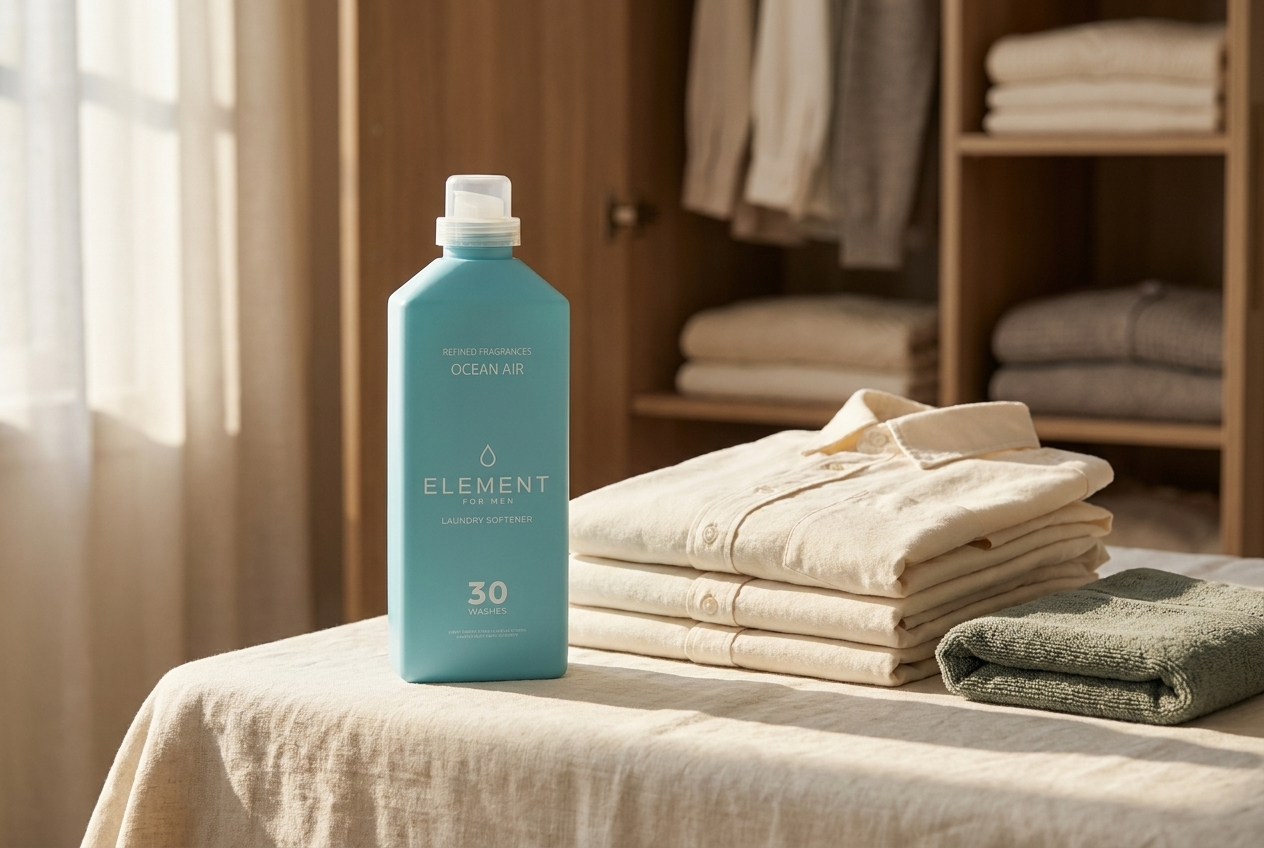
The Ocean Air fabric softener lays down the holding layer, while the matching detergent sheets handle the clean base in a single pre-measured dose. Night Fold and Wild Spice run the same pairing.
Related reading: why fabric softener makes clothes smell better · how to judge a laundry scent that lasts · explore the scent pairings.
Common questions
Does fabric softener or detergent do more for how clothes smell?
Fabric conditioner does more for lasting scent, and detergent does more for the smell of clean. Detergent is formulated to rinse away during the wash, so most of its fragrance leaves with the water. Conditioner is deposited in the final rinse and remains on the fibre, releasing scent slowly over hours as the fabric warms and moves.
Do fabric softeners add more scent than detergent?
They add scent that lasts longer, which is not quite the same thing. Detergent often smells stronger at the moment you unload the machine. Conditioner leaves a thin conditioning layer on the fibres that fragrance clings to, so its scent is still detectable hours later when the detergent fragrance has gone.
Does fabric softener make clothes smell good or is it just about softness?
Both, and the scent effect is the larger one. The conditioning layer that softens fabric is also what gives fragrance a surface to cling to. It is the main reason one wash still smells fresh at the end of the day while another smells of nothing by mid-morning.
Should detergent and fabric softener be the same scent?
Yes. Because conditioner is deposited last and stays on the fibre, it dominates the final result. If the detergent is a different fragrance, most of it is wasted and what remains is an unintended blend of two scents that were not designed together. Matching them lays the same fragrance down twice.
When should you not use fabric softener?
On towels, on technical sportswear and on linen. The conditioning layer blocks absorbency in towelling, interferes with the moisture-wicking that sportswear is engineered for, and flattens the texture of linen. Use detergent alone on those and keep conditioner for cottons, bedding and everyday clothing.