Best-Smelling Laundry Detergent in the UK: What to Actually Look For
"Best smelling laundry detergent" is the most typed phrase in the UK laundry aisle — and the easiest one to get wrong. Most people judge it by how strong a box smells in the shop. That is the least useful test there is.
A detergent that smells incredible on the shelf can smell of nothing by the time you wear it. Here is how to judge scent properly — like a fragrance, not an air freshener — and how to make it survive the day.
Why does detergent smell great in the shop and of nothing on your clothes?
Because opening a box releases the strongest, most volatile part of a scent — the top note. It is built to sell in seconds, not to survive a 40-minute wash, a drying cycle and 8 hours of wear.
That is why the nicest smelling detergent in the shop is so often the most disappointing on your actual clothes. You are testing the wrong ten seconds.
Two detergents can open almost identically and part company within the hour. Judge the opening and you will keep buying openings.
How do you judge a laundry detergent like a fragrance?
The fragrance world has a scorecard for this, and it works just as well on laundry as on a bottle of cologne.
Notes. A fragrance is read in three stages. Top notes are the bright opening you smell in the shop. Heart notes are the character underneath. Base notes — woods, resins, the heavier materials — are what remains hours later. Cheap scent is almost all top note. It announces itself, then leaves.
Sillage. The trail a scent leaves behind you. On a cologne a little is elegant. On laundry the rule is stricter: good scent is what someone notices when they lean in, not a cloud that arrives before you do. Washing that announces itself from the hallway is over-fragranced, not well-fragranced.
Longevity. The only score that really counts. Wash, dry, wear — then smell the collar at 5pm. Most detergents are formulated for the wash and the wardrobe rather than the working day, and fail this one quietly.
Dry-down. What is left once the show-off notes have gone. Perfumers care about it more than anything, because it is the part you actually wear. Judge a detergent on the warm, worn-in smell of a shirt you have had on since breakfast. If that is still pleasant, you have found a good one.
Did you know? Perfumers never judge a fragrance on paper. They test it on skin, over hours, because warmth and time change everything — the same reason a scent lasts longer on moisturised skin than on dry. Fabric works the same way: what it is conditioned with decides how long the scent stays.
What actually decides how a detergent smells on you?
Two things matter far more than shelf appeal.
Fragrance architecture. Cheaper formulas lean on a handful of loud top notes with little underneath to hold them. A scent with a real base is quieter at first and still there at the end of the day.
What comes after the detergent. Detergent's job is to lift material off fabric and be rinsed away, and its fragrance largely goes with it. Fabric conditioner arrives in the final rinse and stays. Choosing a conditioner that lasts will change your result more than changing detergent will.
What makes a laundry scent read as masculine?
Nothing says a men's detergent has to smell a particular way, but two families do most of the work.
The crisp, fresh end — citrus, sea air, cut herbs — reads clean and modern. It is the morning-reset scent, and it suits white tees, shirts and everyday basics. The deeper end — woods, warm spice, a little pepper or leather — reads considered and grown-up, and holds better on heavier pieces and evening clothes.
Both work. What tips either into feeling cheap is oversweetness and sheer volume. Restraint is the trick: a scent that sits close to the fabric rather than shouting across a room. For the wider buying picture, the full guide to choosing a men's laundry detergent covers price, format and performance alongside scent, and the men's detergent range is here.
Does the format change the smell — powder, liquid or sheets?
Less than you would think. Whether you are comparing the best smelling washing powder, a liquid, or a detergent sheet, what decides the 5pm result is fragrance architecture and dose, not format. Where format genuinely matters is dosing: powders and liquids are easy to overdose, and residue dulls scent. A pre-measured sheet takes that variable off the table. The full format comparison is here, including where sheets lose — and if it is sheets you are weighing up, the honest buyer's guide to UK detergent sheets goes brand by brand.
How do you make a laundry scent actually last?
The fixes are unglamorous, and most cost nothing.
Match the detergent and the conditioner
The biggest single lever, and the one almost nobody pulls. Detergent is rinsed away during the wash. Conditioner is deposited in the final rinse and stays on the fibre. If the two are different fragrances the conditioner wins, the detergent scent is largely wasted, and what you end up wearing is an accidental blend nobody designed. Same scent at both stages, so the fragrance is laid down twice.
Dose for the load, not for the day you are having
Excess detergent does not rinse out. It stays in the weave, builds up over months and traps a flat, stale note underneath — which people then respond to by adding more. Fill the conditioner compartment to the line, not above it: most drawers empty through a siphon, and overfilling triggers it early, so the dose drains away in the main wash instead of the final rinse.
Do not pack the drum
Fragrance needs water and movement to distribute evenly. A packed drum gives you patchy scent and patchy cleaning. Leave enough room to fit your hand between the clothes and the top of the drum.
Get the wash out, then dry it slowly
Wet clothes left in a warm drum go stale within hours, and drying does not lift that afterwards. Move the load the moment the cycle ends, then dry in air where you can: heat drives off the volatile compounds that carry fragrance, which is why the same load smells better off an airer than out of a hot tumble dryer.
Put clothes away completely dry
Slightly damp cotton in a closed drawer develops a musty note within a day that no fragrance covers. Do not overfill drawers.
Keep the machine clean
Residue in the drum, drawer and door seal quietly overwrites whatever you just washed. Run a hot empty maintenance cycle every month or two, wash the drawer and wipe the seal.
Commit to one scent
Rotating fragrances means your wardrobe carries three or four at once, none of them coherent. Keeping both halves of a wash on the same scent is what turns laundry from a smell into a signature — the thing people associate with you without working out why.
What should you stop doing?
Stop adding more conditioner. Past the fill line it builds up, stiffens fabric and flattens scent rather than strengthening it.
Stop spraying fabric freshener on clean clothes. It sits on the surface, fades within the hour and layers a second fragrance over the first.
Stop using conditioner on towels and technical fabric. It coats the fibre, costs towels their absorbency and blocks the channels sportswear uses to wick — which is why gym kit behaves the way it does.
Stop expecting scent to survive a hot tumble dry. It will not, and no product fixes that.
How do you test a detergent properly?
Skip the shop. Wash one load, let it dry fully, then check it again 8 hours later. That gap — not the first sniff — tells you almost everything.
One more variable: fibre. Cotton, linen and brushed fabrics are porous, so they take a scent and keep it. Polyester and technical fabrics are built to shed water, so they shed fragrance faster too. The same wash reads completely differently on a shirt and on a training top. Older cotton is its own case: the weave carries enough residue that fresh fragrance has less to bind to, so give those towels a hot wash on their own to strip it back.
Why does my washing smell of nothing even when it's clean?
Usually one of four things: over-dosing and leaving residue, detergent alone with no conditioner, a synthetic load rather than cotton, or a machine that needs a hot maintenance wash. The full diagnosis is here.
Judging Element's three scents this way
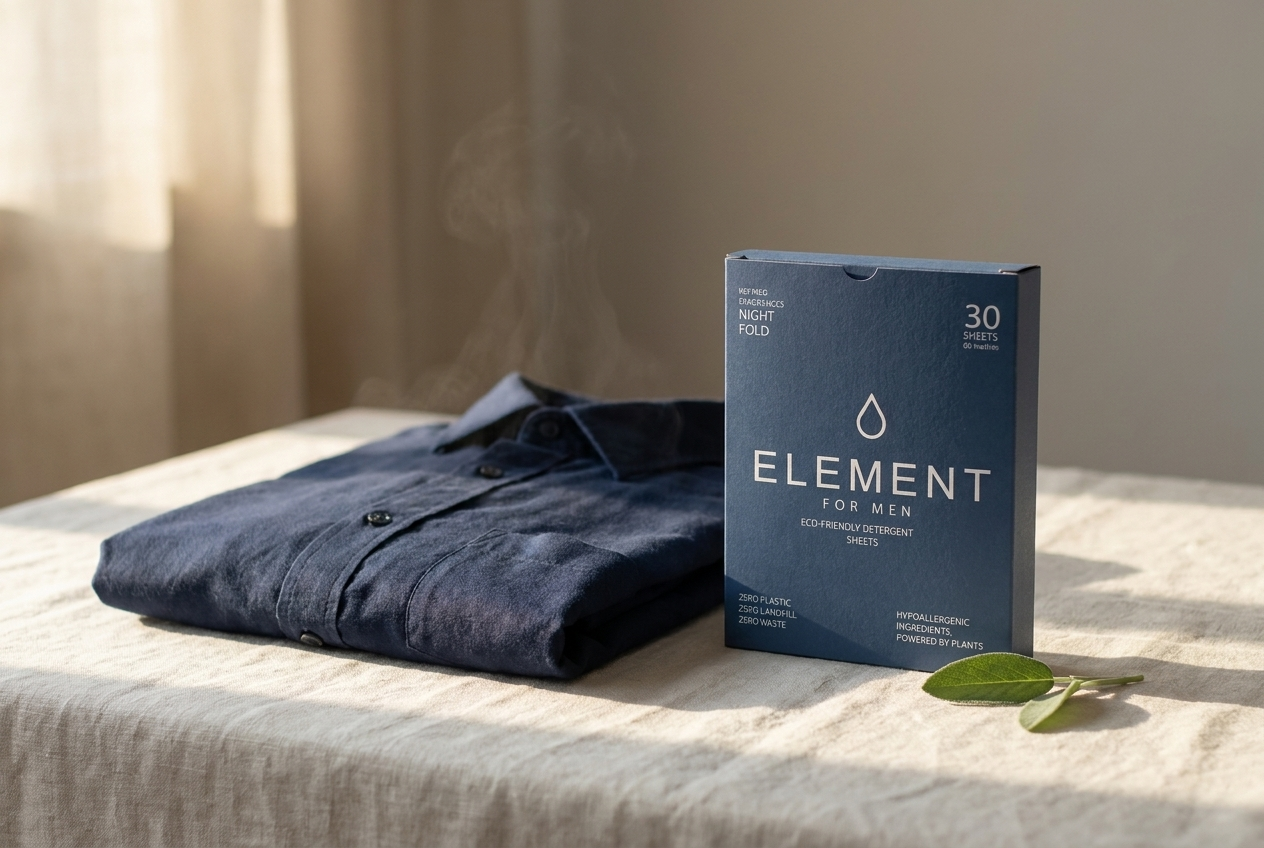
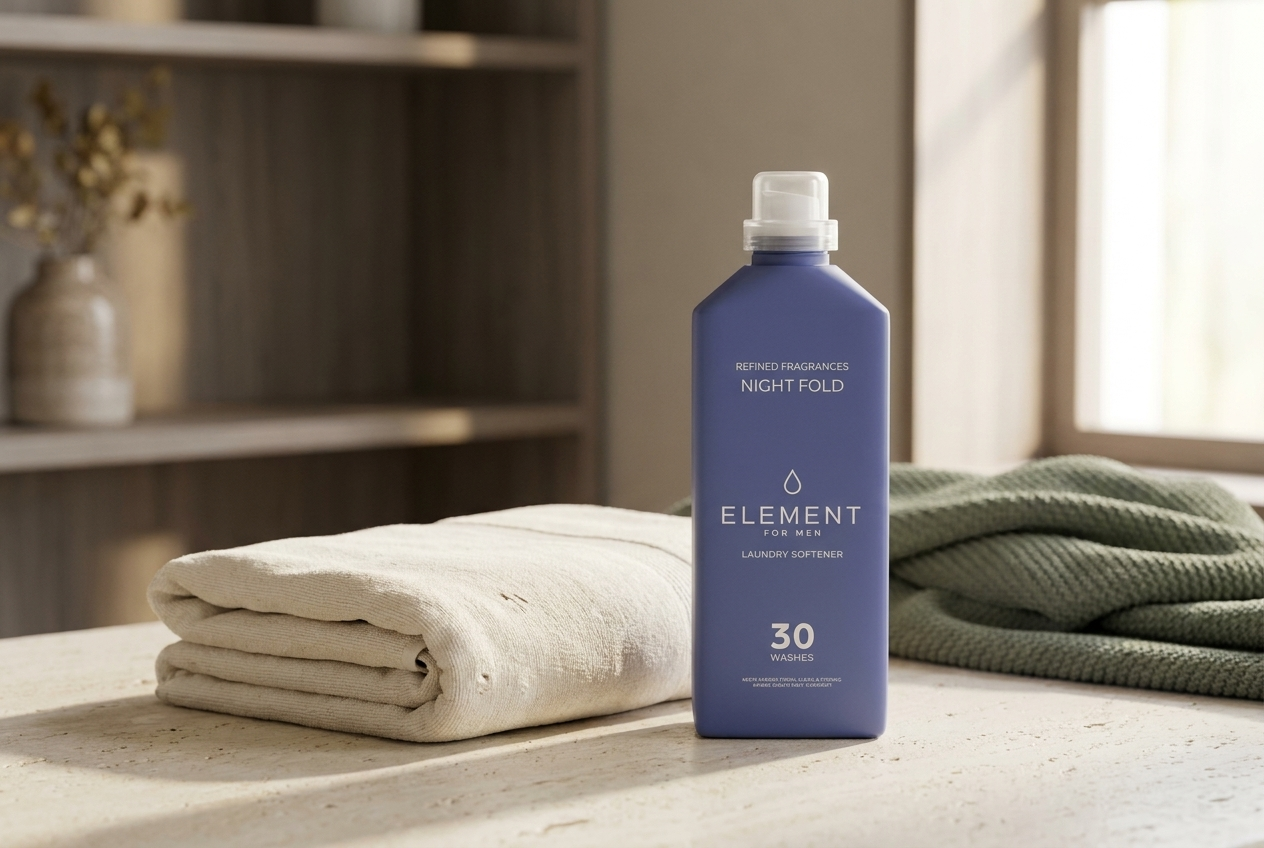
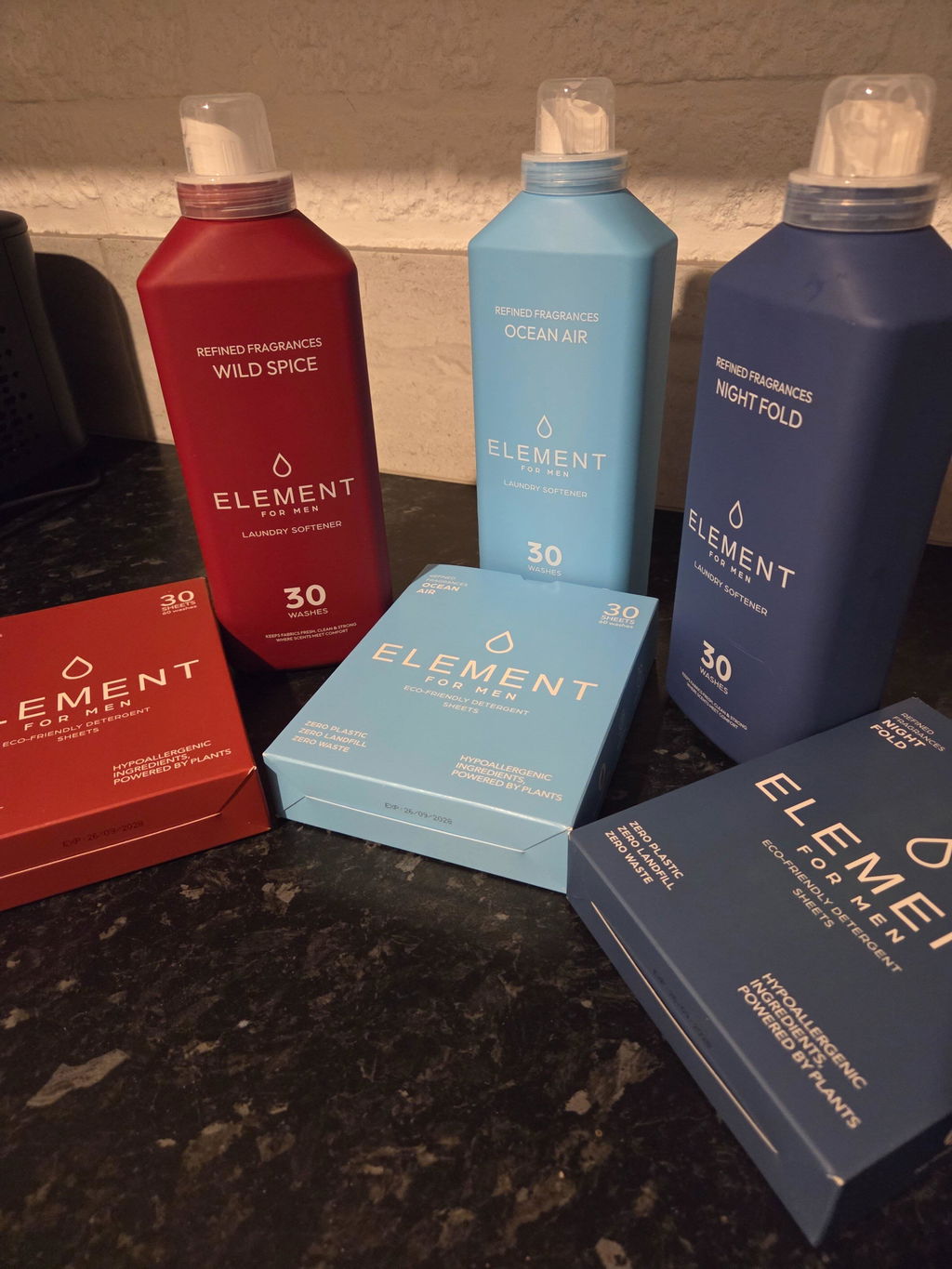
This is the test we built the detergent sheets to pass. A box holds 30 sheets — 30 washes, up to 60 if you halve them — so the dose is decided for you, and the fragrance is built to hold rather than announce itself. The matching 1L conditioner exists so the same scent can be laid down twice.
Built for the 5pm test
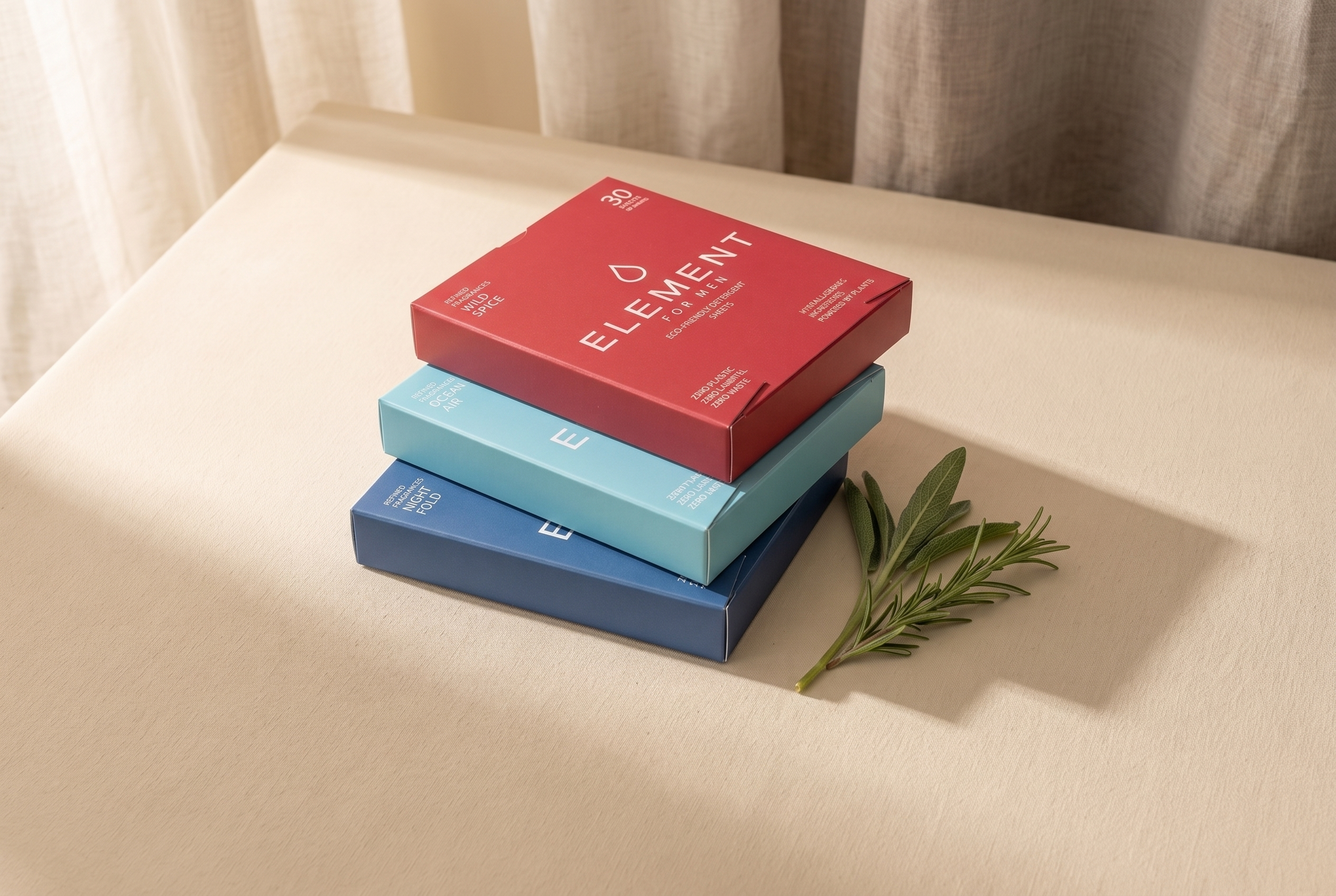
Three signatures. 30 sheets each.
Pre-dosed, so the overdosing variable disappears. Straight into the drum before the clothes — never the drawer.
 Ocean AirAiry freshness, sandalwood, vanilla, warm amber. The morning reset.Detergent sheets · £7.99
 Night FoldLemon, lavender, clean musk, patchouli. Closest to a signature fragrance.Detergent sheets · £7.99
 Wild SpiceBergamot, pepper, patchouli, warm amber. The most presence.Detergent sheets · £7.99
Undecided? The Discovery Detergent Kit puts all three in one box for £19.99. Because conditioner does most of the lasting work, the bundles pair each scent with its matching 1L softener from £14.99 — or take the lot in The Wardrobe.
Two honest notes. The sheets are biological, so they contain enzymes — use a dedicated wool wash for wool, silk and cashmere. And placement matters: the sheet goes into the empty drum before the clothes rather than the drawer, and the conditioner goes into the fabric conditioner compartment, never straight into the drum.
If you would rather not guess, the 10-second scent quiz will point you at one.
The quiet upgrade
"Best smelling" was never about the box. It is about what you notice at 5pm without trying. Judge the dry-down rather than the shelf, give the scent something to hold onto, and the right detergent gets much easier to spot.
Related reading: best smelling fabric conditioner · best laundry detergent sheets UK · how long clothes stay smelling fresh · where fabric softener goes · eau de toilette vs eau de parfum · laundry questions, answered.