How to Wash Wool and Merino Without Felting It
A wool jumper does not shrink. It felts — the fibres lock together and the garment gets smaller and denser in a way that no amount of stretching undoes. 3 things cause it, and you control all 3.
Wool felts when heat, agitation and an enzyme detergent act together. Wash cool, on a wool cycle or by hand, with a dedicated wool wash. Never use a biological detergent on wool, and never tumble dry it.
What felting actually is
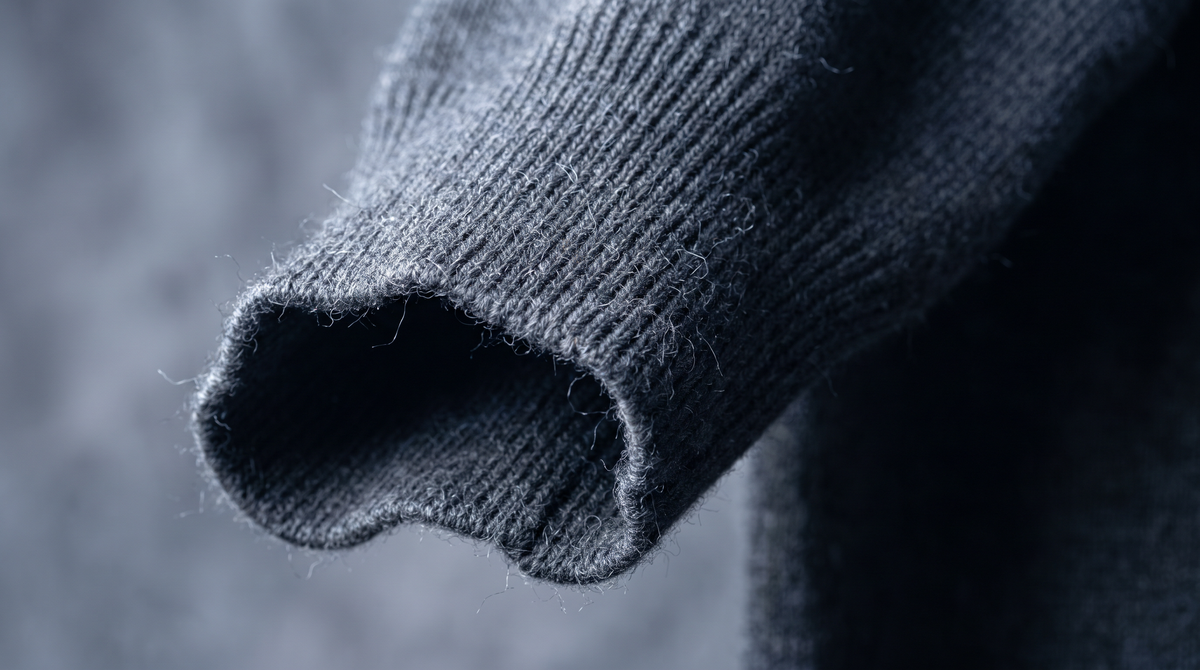
A wool fibre is covered in microscopic scales, like overlapping roof tiles. Add warmth and movement and those scales ratchet against each other and interlock. Once locked they do not release, which is why a felted jumper is permanently smaller rather than temporarily shrunk.
Is felting the same as shrinking?
No, and the distinction matters. Cotton shrinks because tensioned yarn relaxes, and a good proportion of that is recoverable by stretching the garment damp. Felting is a mechanical lock between fibres. Nothing recovers it.
Why is merino more forgiving than it looks?
Merino has a finer fibre and is often treated to smooth the scale structure, which is why so much merino now carries a machine-wash label. Treated merino tolerates a cool machine cycle. Untreated lambswool and cashmere do not, whatever the machine claims.
The wash
How should you wash a merino jumper?
- Turn it inside out and close any zips.
- Use the wool or hand-wash cycle — the defining feature is low agitation, not low temperature alone.
- Wash at 30°C or cooler, with a dedicated wool wash.
- Set the spin to 600 rpm or lower. Wool holds a lot of water and a hard spin stretches the garment while it is heavy.
- Reshape it flat and dry it flat, away from a radiator.
Why can you not use a biological detergent on wool?
Because enzymes exist to break down protein, and wool is protein. A biological detergent will not felt a jumper on its own, but it will quietly digest the fibre across repeated washes — the jumper thins, pills more, and loses its handle. That is true of every biological detergent on the market, ours included. Wool, silk and cashmere need a dedicated wool wash.
Does fabric softener help wool?
It is unnecessary and often counterproductive. A good wool wash already contains a conditioning agent suited to the fibre, and softener on top coats the wool and flattens the loft that makes it warm. Skip it here.
Wool, silk and cashmere are protein fibres. No biological detergent and no oxygen booster belongs on any of them. Everything else in a normal wardrobe is fine.
Drying, and the mistakes that cost jumpers
Can you tumble dry wool?
No. A tumble dryer supplies heat and agitation at the same time, which is the exact recipe for felting. Even a cool dryer cycle produces enough movement to matter. Dry flat, every time.
How do you dry a wool jumper without stretching it?
Lay it on a towel, roll the towel to press out water, then reshape it flat on a dry towel or a mesh rack. Hanging a wet jumper stretches the shoulders and lengthens the body under its own weight, and the shape does not come back.
Wool does not shrink in the wash. It felts in the dryer.
Between washes
How often should you wash wool?
Far less often than cotton. Wool resists odour naturally and every wash is a small risk, so 3 to 5 wears is normal for a jumper and considerably more for outerwear. Air a jumper overnight and most of the day's odour is gone by morning.
What about moths and storage?
- Store wool clean — moth larvae feed on body soil, not on the wool alone.
- Fold rather than hang, so the shoulders keep their shape.
- Use a breathable cotton bag rather than a sealed plastic one.
- Air a stored jumper for a day before wearing it.
This is the page where we tell you not to use our product. Element sheets are biological — the enzymes are what handle sweat and body soil at 30°C — and that makes them the wrong choice for wool, silk and cashmere. Use a dedicated wool wash for those 3.
For everything else in the wardrobe, that same enzyme content is the reason a cool wash still works. 1 sheet, 1 load, in the empty drum before the clothes. No measuring cap, so no accidental over-dosing.
We would rather be the brand that tells you where its product stops. It costs us a jumper's worth of detergent and buys the rest of your wardrobe.
See the detergent sheetsKeep reading
Written and fact-checked by the Element for Men editorial team. General guidance only — always follow the care label on the garment.