How to Wash Denim Without Losing the Colour
Denim fades because indigo was never fixed into the yarn in the first place — it sits on the surface and leaves a little at a time. You cannot stop that. You can slow it down considerably.
Wash jeans inside out, at 30°C, on a short cool cycle, and only when they need it. Heat, agitation and long soaks are what pull indigo out. Air dry away from direct sun, and never tumble dry raw denim.
Why denim fades at all
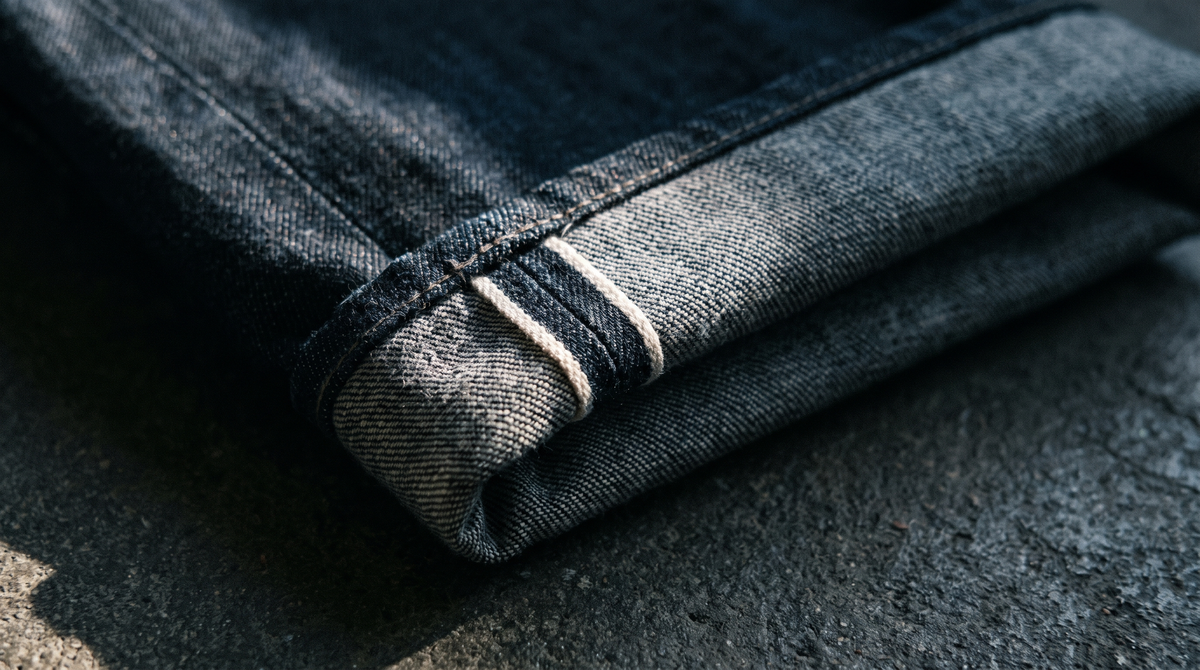
Indigo is a ring dye. It bonds to the outside of each cotton yarn and leaves the core white, which is precisely why worn denim develops highlights along the seams and across the knees — the surface layer abrades and the pale core shows through. It is a feature of the dye, not a fault in the jeans.
Does washing jeans ruin them?
Washing correctly does not. Washing hot, long and often does. Each of those 3 removes more surface indigo than the last, and none of them is required to get a pair of jeans clean.
Should you wash raw denim at all?
Eventually, yes. The advice to avoid washing raw denim for 6 months is about letting wear patterns form before the first wash evens them out. It is an aesthetic choice, not a hygiene one, and body oils left in cotton indefinitely weaken it.
The wash that keeps the colour
How do you wash jeans so they do not fade?
- Turn them inside out and fasten the button and zip.
- Wash with similar dark colours only, on the shortest cycle that will do the job.
- Set 30°C. Cooler still is fine.
- Dose normally — more detergent does not clean denim better and does leave residue in a heavy weave.
- Remove them promptly and hang to dry.
What temperature should you wash jeans at?
30°C. Warm water opens the cotton and releases dye faster, and modern detergents are formulated to work cool. A 30°C wash also uses roughly a third less energy than 60°C, which is the rare case where the careful option is also the cheap one.
Does washing inside out really work?
Yes, and it is the easiest of these to do. The abrasion of a wash cycle falls on whichever surface faces outward. Turned inside out, the drum scours the pale interior and leaves the indigo face alone.
Biological detergents break down protein, and wool, silk and cashmere are protein fibres. Keep those 3 out of a denim load and wash them separately with a dedicated wool wash.
Drying and the myths
Can you tumble dry jeans?
You can, and it costs you both colour and fit. Dryer heat shrinks the cotton, hardens the hand and accelerates fading, and on raw denim it can pull a leg out of shape permanently. Hang them by the waistband and let them dry slowly, out of direct sunlight — sun bleaches indigo as effectively as any wash.
Does putting jeans in the freezer clean them?
No. This one has been tested repeatedly and does not hold up. Freezing suppresses odour temporarily and the smell returns as the fabric warms, because nothing has been removed. Airing jeans on a hanger overnight achieves more, and costs nothing.
Indigo leaves a little every wash. The question is only how much you invite it to.
How often, and what to do between washes
How often should you wash jeans?
Every 5 to 10 wears for most people, and sooner for anything that has actually got dirty. Denim is a heavy weave that holds odour less readily than a jersey t-shirt, so the interval is genuinely longer than it is for the rest of the wardrobe.
What about spot cleaning?
- Treat a mark with cool water and a little detergent on a cloth, working inward.
- Air jeans overnight rather than folding them straight away.
- Hang them by the belt loops so air moves through the legs.
- Wash sooner if they have been worn to the gym or in the rain.
Denim is the case that makes the argument for a cool wash. Element sheets are biological, so the enzymes handle body soil at 30°C without the hot water that pulls indigo out of the yarn.
Dosing matters more here than people expect. A heavy weave holds residue, and residue is what makes denim feel stiff and look dull. 1 sheet, 1 load — no cap to over-fill, no guesswork.
If you want scent that survives a cool cycle, run the same scent in both stages: sheet in the drum, softener in the ❀ compartment. And keep wool, silk and cashmere out of it — those 3 need a dedicated wool wash.
See the bundlesKeep reading
Written and fact-checked by the Element for Men editorial team. General guidance only — always follow the care label on the garment.