How to Wash Shirts So the Collar and Cuffs Last
A shirt almost never wears out across the body. It fails at the collar and the cuffs, in that order, and both failures start with the same invisible deposit that a normal wash was never asked to remove.
Collar and cuff grime is sebum from skin, and it needs enzymes and time rather than heat and scrubbing. Pre-treat the collar, wash at 40°C, dry on a hanger, and iron the collar last.
What the grey line on a collar actually is
Run a finger inside the collar of a shirt at the end of a day and it comes away slightly oily. That is sebum — the oil skin produces continuously — mixed with skin cells, hair product and whatever the day added. It is colourless when fresh. It goes grey because it is sticky, and it collects airborne dust from the moment it arrives.
Why does a normal wash not remove it?
Because the deposit is oily, and a cool wash cycle gives surfactants very little time on a small, heavily loaded area. The rest of the shirt is barely soiled and comes out clean, which is why the collar looks worse relative to the body with every wash rather than better.
Why do cuffs go before the rest of the sleeve?
Cuffs collect the same sebum from wrists and take the abrasion of desks, sleeves and bag straps. The fabric is also doubled and interlined, so it dries slowly and holds residue longer than a single layer.
The wash
How do you get a collar clean?
- Lay the collar flat and work a little detergent solution into the fold with a soft brush or your thumb.
- Leave it for 15 to 30 minutes. Time is doing the work here, not pressure.
- Wash at 40°C on a normal cycle with the shirt buttoned and inside out.
- Air dry on a hanger, then inspect before ironing.
Should you scrub a collar?
As little as possible. Hard scrubbing abrades the weave along the fold, and a frayed collar edge is what actually retires a shirt. A soft brush and a longer soak achieves more than a stiff brush and 30 seconds.
What temperature works on sebum?
40°C is the practical answer for most shirts. Body oil shifts more readily above 30°C, while 60°C shrinks cotton, yellows the interfacing in a stiff collar and shortens the life of the shirt considerably. If a shirt is labelled 30°C, extend the pre-treatment rather than raising the heat.
Biological detergents work by breaking down protein and oil, and wool, silk and cashmere are protein fibres. Silk shirts and wool-blend shirts need a dedicated wool wash, not an enzyme detergent. Everything cotton, linen or synthetic is fine.
Drying, ironing and shape
Should shirts be tumble dried?
Ideally not. Dryer heat shrinks cotton unevenly, and it is the collar and cuffs — with their extra layers and interlining — that distort first. Hang a shirt straight out of the machine on a broad hanger, fasten the top button, and most of the creasing drops out on its own.
How should you iron a collar?
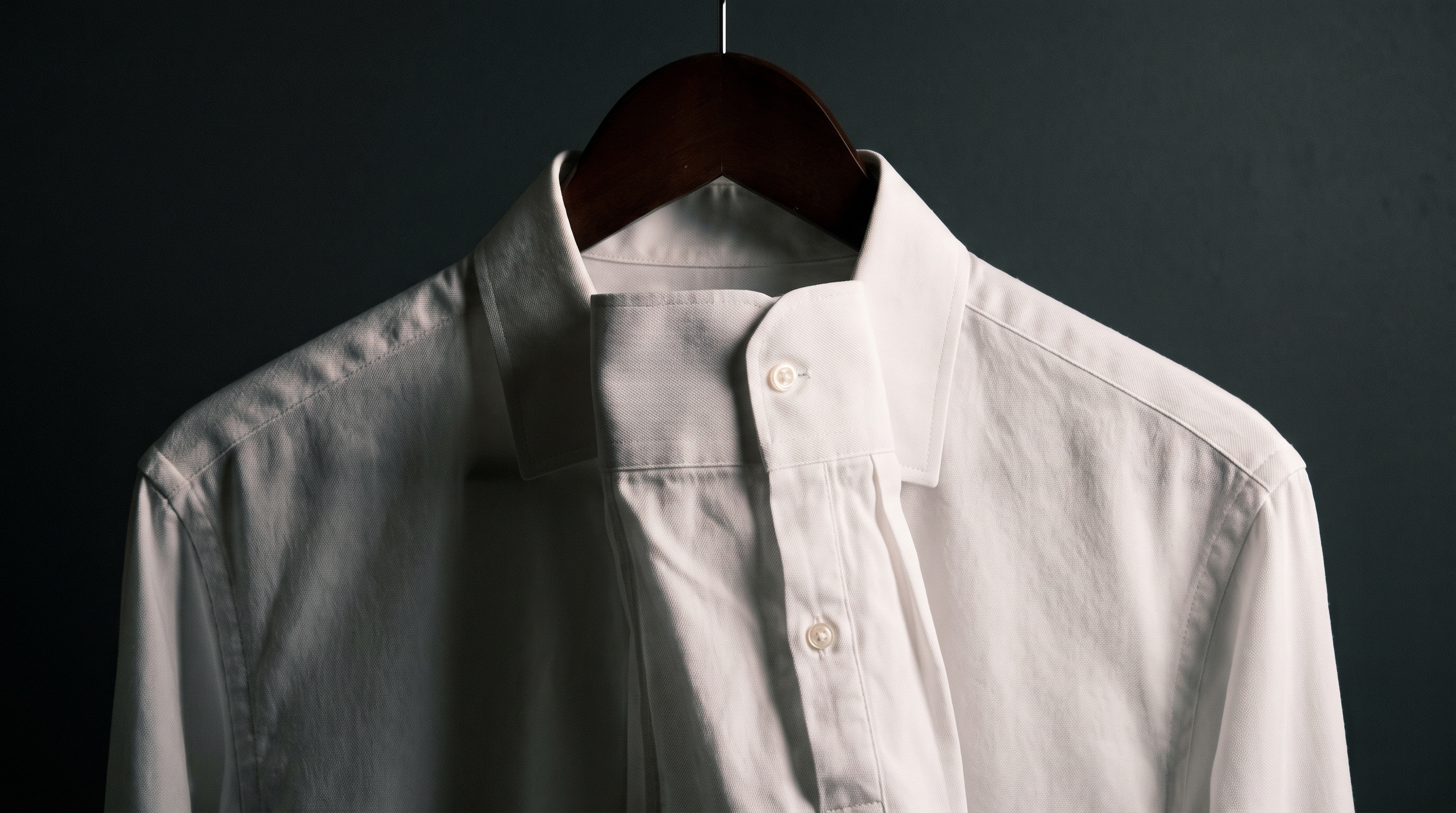
Underside first, from the points inward, then the outside. Working from the points prevents the small diagonal creases that form when fabric is pushed ahead of the iron. Do the collar and cuffs last so they are not crushed while you press the body.
Shirts do not die of dirt. They die of scrubbing, heat and haste.
Habits that double the life of a shirt
Does rotating shirts help?
Yes, more than any product does. Cotton recovers between wears, and a shirt worn once a fortnight lasts several times longer than the same shirt worn weekly. A larger rotation is the cheapest upgrade available to anyone who wears shirts to work.
What else is worth doing?
- Let moisturiser, aftershave and hair product dry fully before dressing.
- Wash worn shirts within 2 days rather than at the weekend.
- Remove collar stays before washing.
- Store shirts hanging, with room between them, so the collars keep their shape.
Collar grime is the case Element was built for. Our sheets are biological, and enzymes are what break down sebum and skin protein at temperatures low enough to keep the shirt the size you bought it.
For pre-treating, tear a corner off a sheet, dissolve it in a little warm water and work that into the collar fold. Then 1 sheet in the empty drum before the clothes for the wash itself, and softener in the ❀ compartment if you want the shirt to feel finished.
The limit, stated plainly: enzymes and protein fibres do not mix. Silk and wool-blend shirts need a dedicated wool wash.
See the detergent sheetsKeep reading
Written and fact-checked by the Element for Men editorial team. General guidance only — always follow the care label on the garment.