Are Detergent Sheets Better for the Environment Than Liquid?
Sheets win one part of this argument decisively. Here is which part, why it holds up without any contested science, and the 4 things that matter more than the format you buy.
On packaging, transport and delivery, sheets are clearly better: no plastic bottle, roughly a tenth of the shipping weight per wash, and a flat box that posts through a letterbox. On the cleaning chemistry itself, the 2 formats draw from the same palette of surfactants.
What is genuinely settled
Do detergent sheets use less packaging?
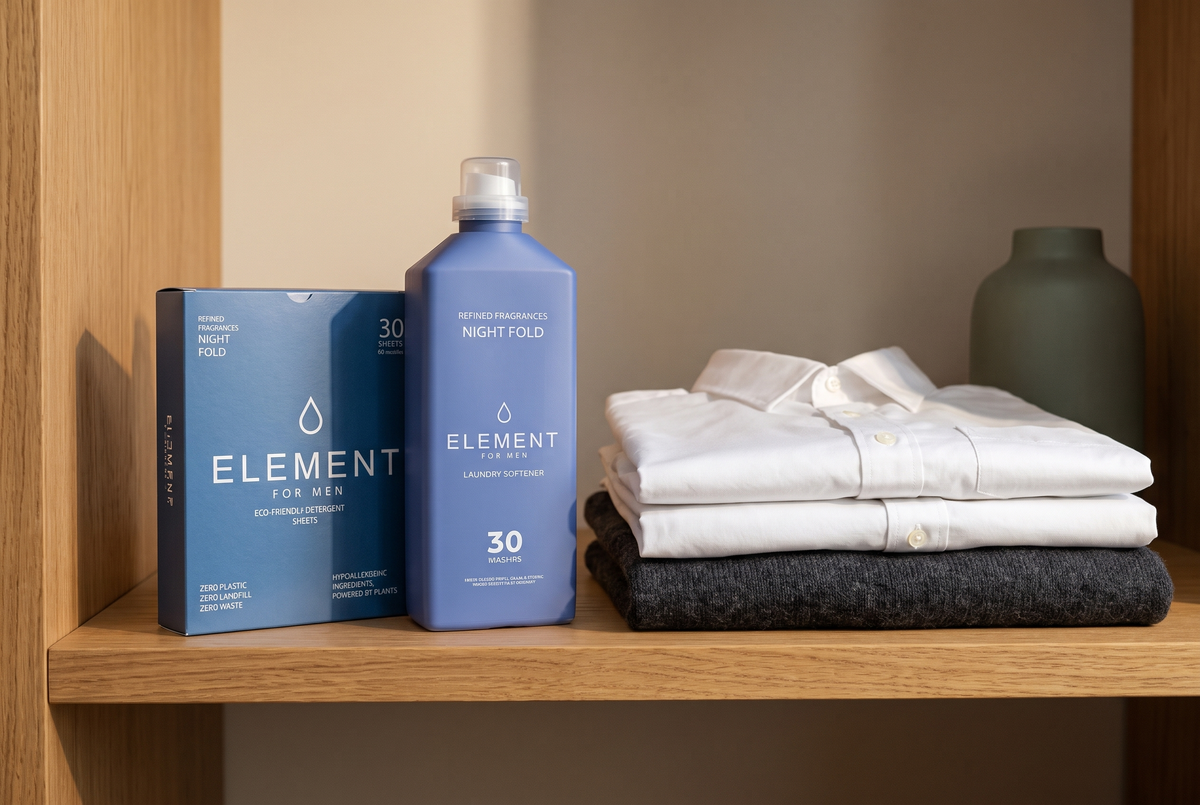
Yes, and this is the least arguable point in the comparison. A typical 30-wash liquid arrives in a rigid HDPE bottle weighing 80–120g, plus a separate cap and dosing device. A 30-wash sheet pack arrives in a flat cardboard carton weighing a fraction of that, with no cap and no dosing cup. Cardboard is kerbside-recyclable across every UK local authority; the bottle usually is too, but only if it is rinsed, and rinsing is not what most people do.
Do sheets weigh less to transport?
Substantially. Liquid detergent is mostly water — commonly 60% to 80% by weight. A sheet is the same active chemistry with the water removed, so a box of 30 washes weighs a few tens of grams rather than well over a kilogram.
Every lorry, pallet and van carrying liquid detergent is carrying a great deal of water from a factory to a shelf to a house that already has water. This is the strongest environmental argument for the format and it does not depend on any contested science. Less mass moved is less fuel burned.
Liquid detergent is mostly water. You already have water. It arrives in the machine, free, at exactly the moment it is needed.
What the format does not change
Are the surfactants different?
Not inherently. Sheets and liquids draw from the same palette of anionic and non-ionic surfactants. A sheet is not automatically made from gentler or greener chemistry; it is the same class of ingredient with the water taken out. Any brand claiming otherwise should be asked to name the surfactant.
What matters more than the format
In most households, 4 habits move the number further than the product does:
- Washing at 30°C instead of 40°C. Heating the water is the dominant energy cost of a wash, by a wide margin.
- Filling the drum properly. A half-empty machine uses nearly the same water and power as a full one.
- Dosing correctly. Overdosing wastes product and leaves residue that makes fabric feel and smell worse.
- Air-drying. A tumble dryer typically uses several times the energy of the wash that preceded it.
The word eco on the front of either box. It has no fixed legal meaning in the UK, and the Advertising Standards Authority has upheld complaints across this category against brands whose environmental claims outran their evidence. Buy on the things you can check yourself: packaging, weight, dose and cost per wash.
Element sells detergent sheets, so we have an obvious interest in this comparison — which is exactly why we will only claim what is checkable.
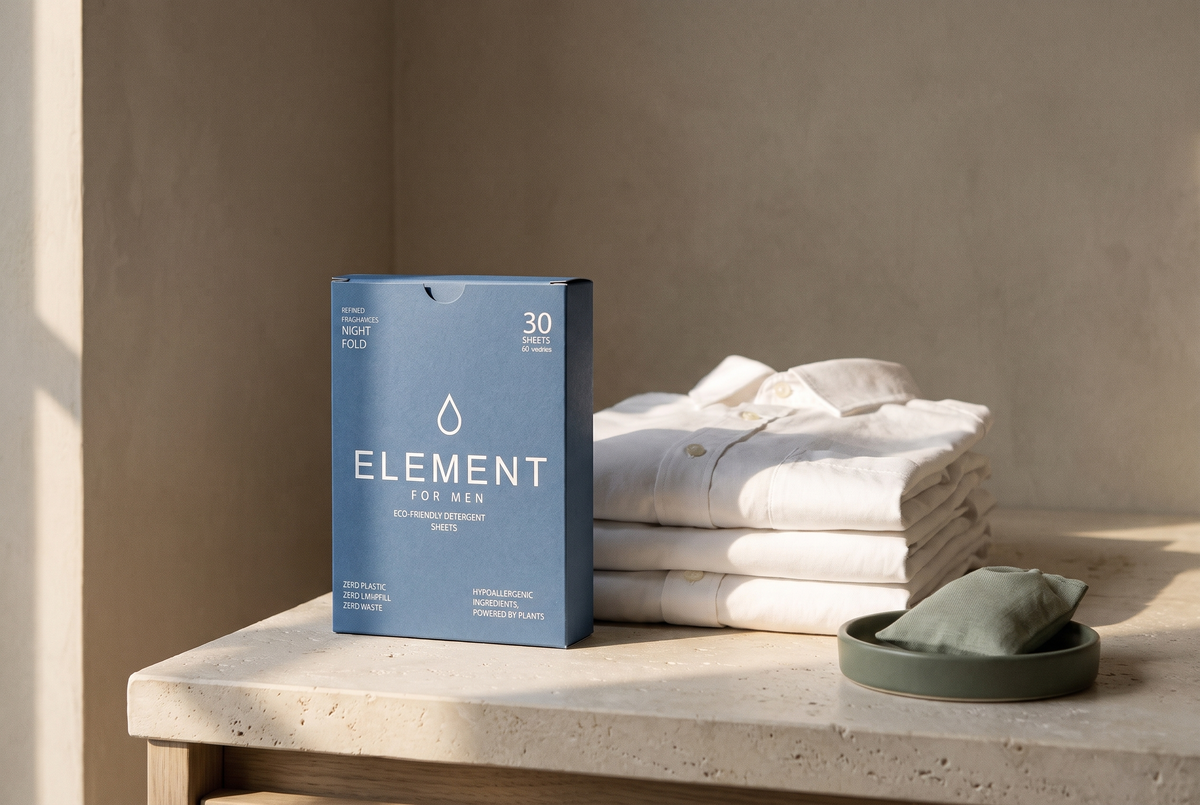
No plastic bottle. No plastic film around the dose. 100% recyclable cardboard. Ships flat and posts through a letterbox. 30 sheets, 30 washes — up to 60 if you halve them for smaller loads. Designed to dissolve and work from 30°C, which is where the real saving is.
The sheets are biological — they contain enzymes, which is what handles sweat and body soil at a low temperature. That also means they are wrong for wool, silk and cashmere; use a dedicated wool wash for those 3.
See the sheetsKeep reading
Written and fact-checked by the Element for Men editorial team. General guidance only — always follow the care label on the garment.