Concentrated vs Diluted Detergent: What “Concentrated” Actually Means
One of the few words in the aisle with a real meaning behind it, and one of the most frequently misread. Concentrated tells you about water content. It tells you nothing about performance.
Concentrated means the product contains less water, so a smaller dose does the same job. It is a statement about dilution, not cleaning power. A concentrated detergent is not stronger than a standard one — it is the same chemistry with less water carried around it.
The word, defined
What does concentrated detergent mean?
A higher proportion of active ingredients to water. A standard liquid detergent is commonly 60% to 80% water by weight. A concentrated one reduces that, so the recommended dose falls correspondingly — 35ml instead of 75ml, say, for the same load. Same result, less liquid.
Is concentrated detergent stronger?
No, and this is the misreading that costs people money. Stronger implies more cleaning per wash. Concentrated means less water per bottle. Dose a concentrated detergent as though it were standard and you have not made the wash more powerful — you have overdosed it, wasted product and left residue in the fabric.
The amount of active chemistry reaching the load is set by the dose instruction, not the concentration. 2 properly dosed washes, 1 concentrated and 1 standard, deliver broadly the same thing to the drum.
Is a detergent sheet concentrated?
A sheet is the end point of concentration: the water is not reduced, it is removed. What is left is the active chemistry dried onto a dissolvable carrier, dosed as 1 unit. That is why a box of 30 washes weighs a fraction of a bottle of 30 washes, and why it fits through a letterbox.
Liquid detergent is mostly water. You already have water. It arrives in the machine, free, at exactly the moment it is needed.
Why anyone bothers
What are the actual advantages?
- Transport. Less mass moved from factory to shelf to house.
- Packaging. A smaller bottle for the same number of washes, or no bottle at all.
- Storage. 30 washes that fit in a drawer rather than occupying a cupboard floor.
- Dosing discipline. Small doses are measured; large doses are poured.
Comparing products properly
How do you compare concentrated and standard detergents?
Cost per wash, always. Never price per litre, never price per bottle. The number you want is the pack price divided by the number of washes the manufacturer's own dose instruction gives you at a full load.
| What you compare | Why it misleads | Use instead |
|---|---|---|
| Price per bottle | Bottles hold different numbers of washes | Cost per wash |
| Price per litre | Punishes concentration for being concentrated | Cost per wash |
| Washes on the front of the pack | Often assumes a small or half load | Washes at the full-load dose |
| Dose in millilitres | Means nothing across different concentrations | Cost per wash |
Swipe to see the full table
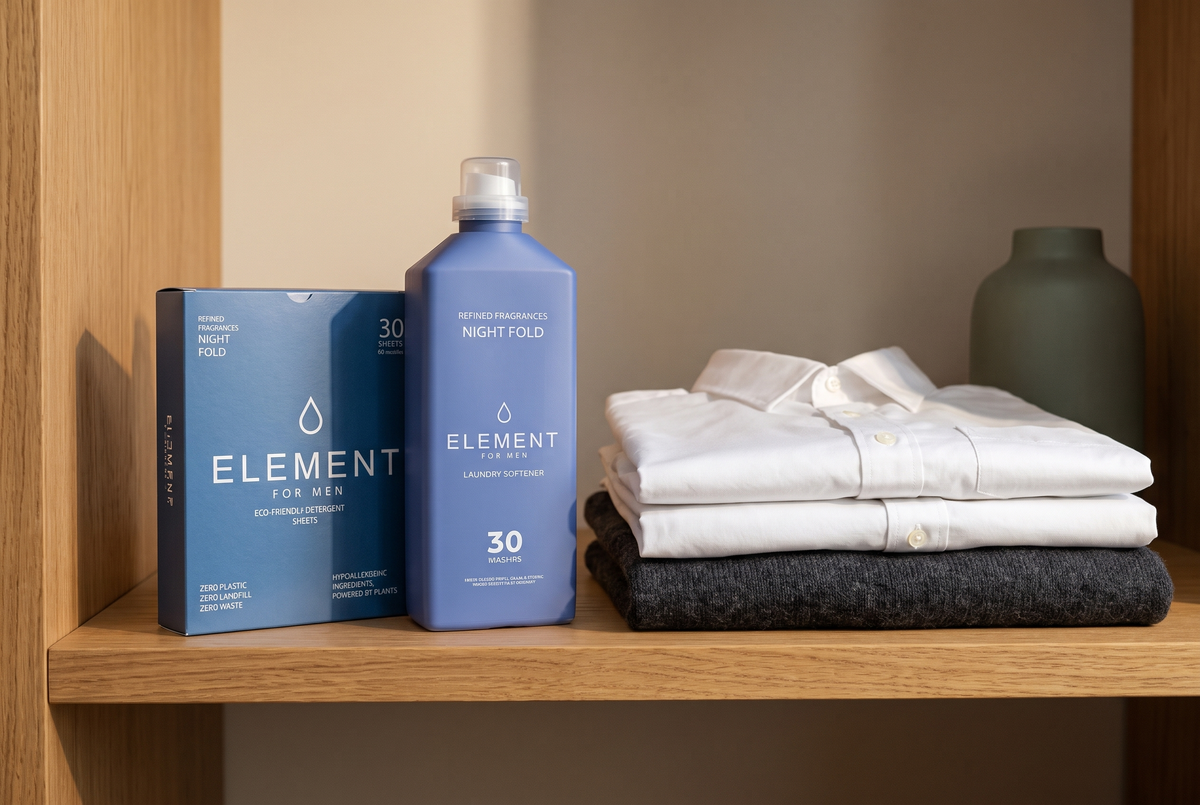
Element's sheets are concentration taken to its conclusion — the water removed entirely, the chemistry dried onto a dissolvable carrier, 1 sheet per load. It is why a 30-wash box posts through a letterbox instead of arriving on a pallet.
We state the wash count the honest way: 30 sheets — 30 washes, up to 60 if you halve them for smaller loads. Not “up to 60 washes” on the front with the halving instruction in the small print.
The sheets are biological — they contain enzymes, which is what makes them work from 30°C. That also means they are wrong for wool, silk and cashmere; use a dedicated wool wash for those 3.
See the sheetsKeep reading
Written and fact-checked by the Element for Men editorial team. General guidance only — always follow the care label on the garment.