Oil and Grease Stains: Why Water Alone Never Works
The stain that looks gone until the fabric dries. Oil obeys different rules from every other mark on your clothes, and the instinct that works on wine fails here completely.
Blot, cover with an absorbent powder, then work washing-up liquid or a lipase-containing detergent into the mark and wash warm. Water alone cannot shift oil — it needs a surfactant to break the oil into droplets the water can carry away.
Why oil is different
Why doesn't water remove an oil stain?
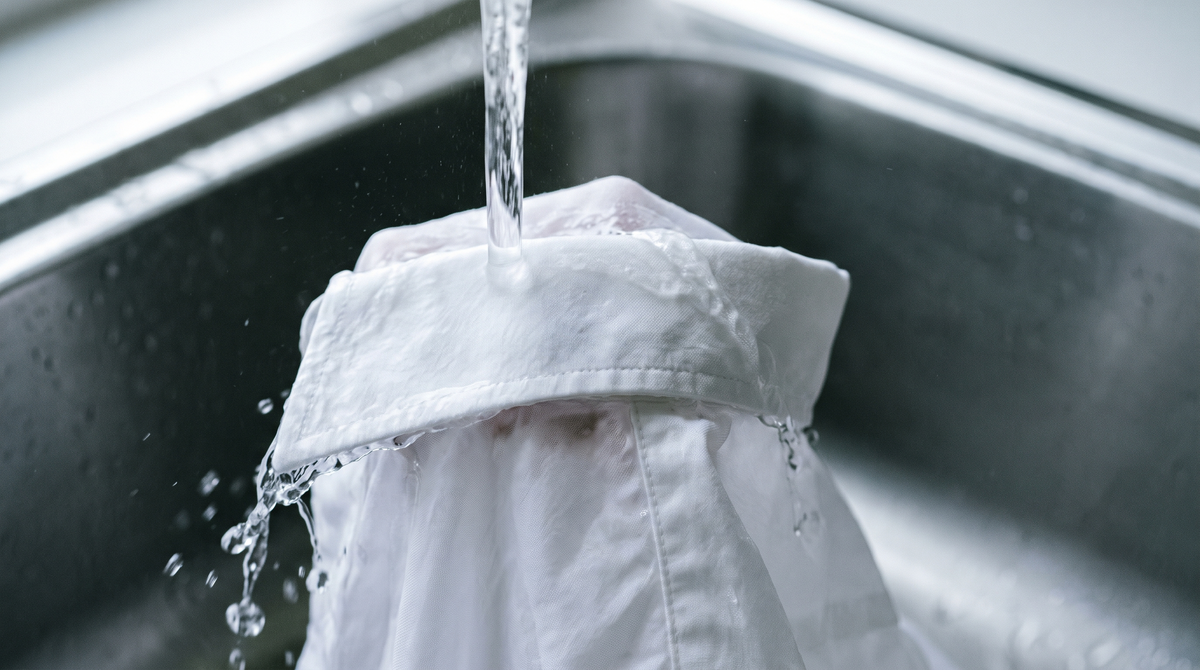
Because oil and water do not mix, which is not a figure of speech but a description of molecular behaviour. Water molecules are polar and attract each other strongly; oil molecules are non-polar and are excluded from that network. Rinsing an oil mark under a tap moves water across the surface and leaves the oil exactly where it was.
What actually removes oil?
A surfactant. Surfactant molecules have a water-loving head and an oil-loving tail, so they surround an oil droplet with their tails inward and their heads outward — an oil droplet wrapped in a water-compatible shell that the rinse can carry away. Every detergent works this way. It is the most useful piece of laundry chemistry to understand.
Why does the stain reappear after the fabric dries?
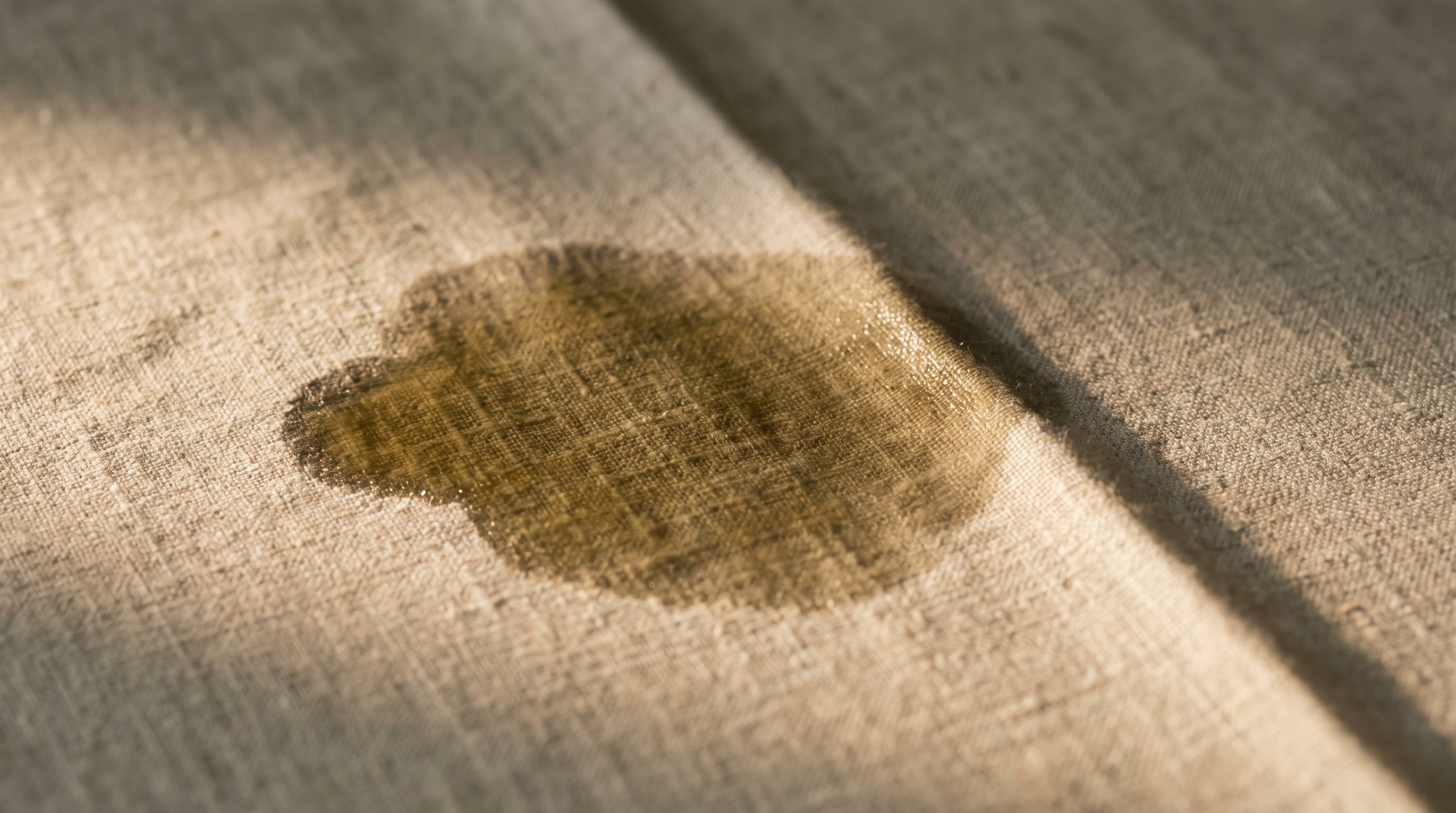
Because wet fabric is already darkened and translucent, so a residual oil mark is invisible against it. As the water evaporates the fabric returns to its normal opacity and the oil, which never left, becomes visible again. Always assess an oil stain on dry fabric, and never tumble dry a garment you have not checked dry.
Assess an oil stain dry. Wet fabric hides it, and the dryer makes it permanent.
The method
How do you remove a fresh oil or grease stain?
- Blot, do not rub. Press a clean cloth onto the mark to lift the surface oil. Rubbing drives it deeper into the weave.
- Cover with an absorbent powder — cornflour, talc or bicarbonate of soda — and leave 15 to 30 minutes. The powder draws oil out of the fibre by capillary action. Brush it off.
- Work in a drop of washing-up liquid or a detergent containing lipase, with a fingertip or soft brush. Leave 5 to 10 minutes.
- Wash at 40°C — warmer than you would use for protein. Warmth lowers the oil's viscosity and helps the surfactants work.
- Check the fabric dry. Repeat before drying if any shadow remains.
How do you remove an old, set-in oil stain?
Harder, and often still possible as long as it has not been through a hot dryer. Repeat the powder step for several hours rather than 30 minutes, then apply washing-up liquid neat and leave it overnight before washing at 40°C. 2 or 3 cycles of this will lift many old marks. Once oil has been polymerised by dryer heat, it is generally there for good.
Specific cases
Why does gym kit smell even after washing?
For exactly this reason, in slow motion. Polyester is oleophilic — it attracts and holds body oil — and a normal wash removes the water-soluble soil while leaving some oil behind. That residue oxidises and produces the smell that reappears the moment you warm up. Fabric softener makes it worse, because the cationic film seals the oil in.
Technical fabric needs a full dose of detergent and no softener, and it benefits from being washed sooner rather than later. Gentleness is the wrong instinct here — it is oil you are trying to shift, and oil needs surfactant.
Element's sheets carry anionic and non-ionic surfactants — the 2 classes that do the emulsifying described above — alongside enzymes. That combination is why a sheet handles a mixed stain of oil and protein, which describes most of what actually lands on clothes.
One thing matters more than the product: the sheet goes in the drum, not the drawer. In the drawer it dissolves incompletely and you get a fraction of the surfactant you paid for. Into the empty drum, then the clothes on top.
And on gym kit — full dose, no softener. Softener's cationic film seals body oil into synthetic fibre, which is the opposite of what you want.
See the sheetsKeep reading
Written and fact-checked by the Element for Men editorial team. General guidance only — always follow the care label on the garment.