Tannin Stains: Tea, Coffee, Wine and Fruit Juice
These are not dirt. They are dye, and they behave like dye — which is why the thing most people reach for first is the thing most likely to set them.
Flush immediately with a large volume of cool water from the back of the fabric, then treat with oxygen bleach rather than enzymes. Tannins are plant dyes, not soil. Soap on a fresh tannin mark can fix the colour into the fibre.
What a tannin stain actually is
Which stains are tannin stains?
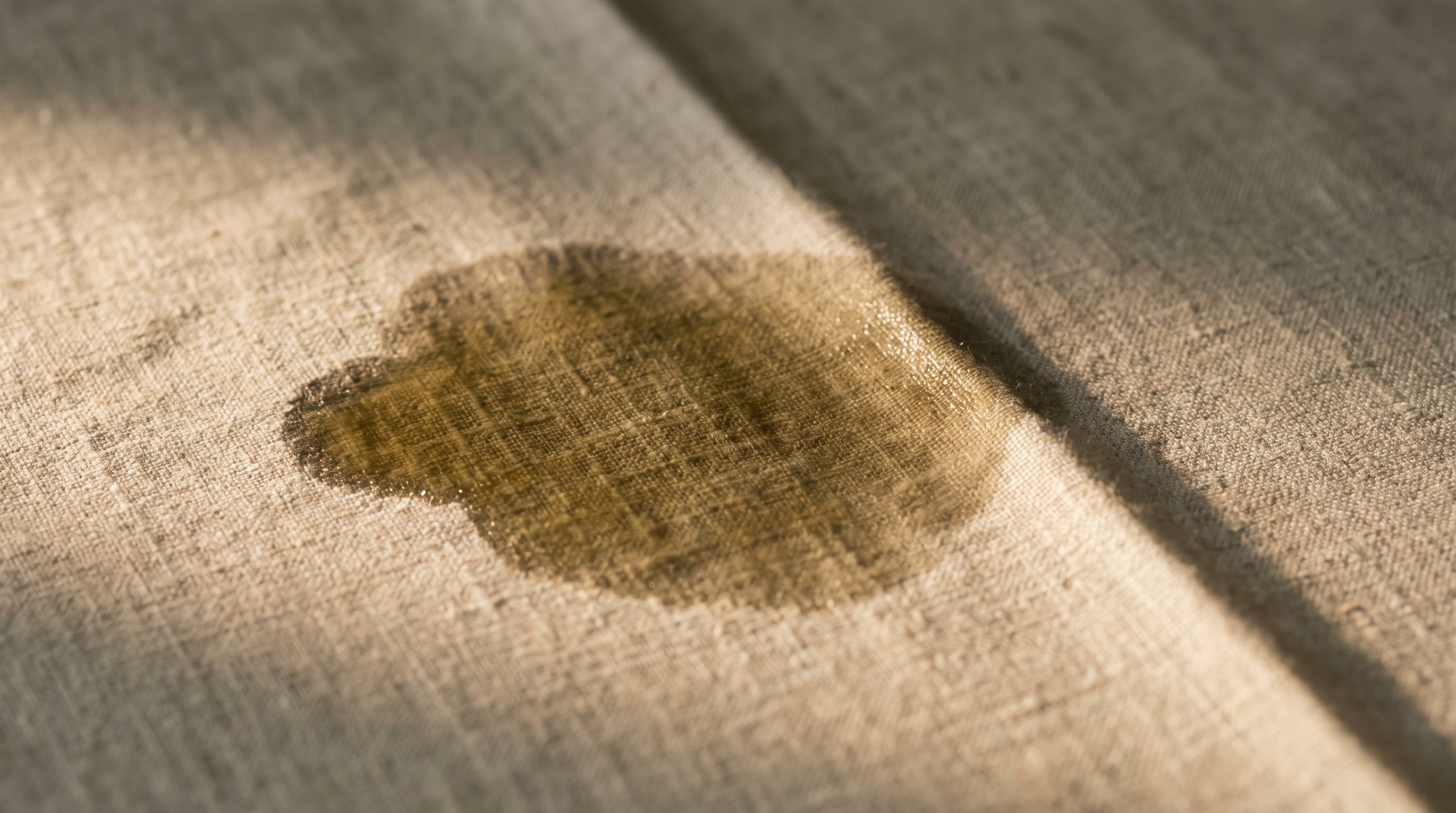
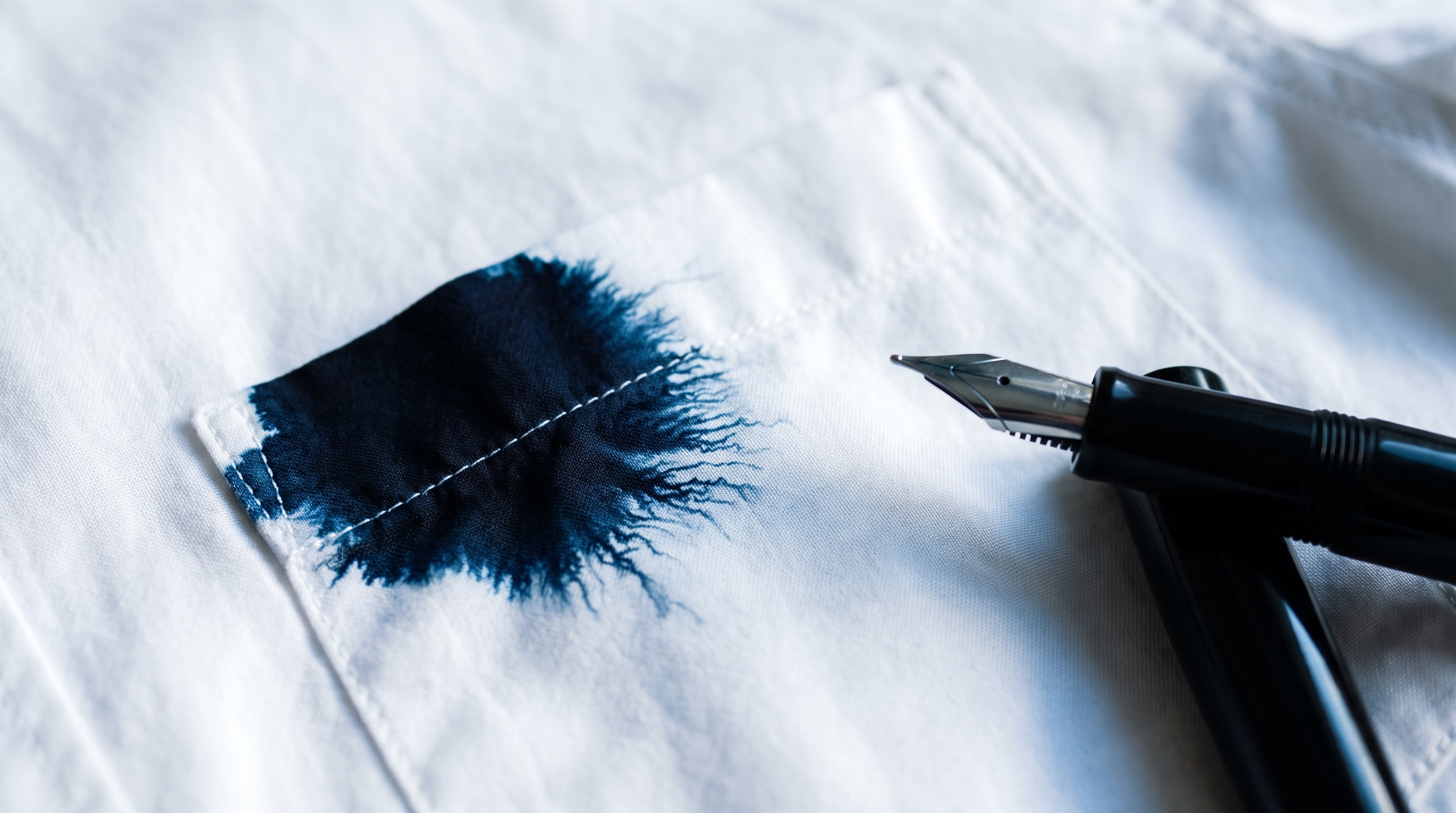
Tea, coffee, red and white wine, fruit juice, berries, cola and beer. Tannins are polyphenols produced by plants; they are the astringency in strong tea and the structure in red wine, and they are, chemically speaking, natural dyes. Some have been used to dye cloth deliberately for centuries.
Why does that change the approach?
Because you are not lifting a substance off the fibre — you are trying to decolourise something that has bonded to it. Surfactants and enzymes are aimed at soil and protein. Neither breaks a dye bond. What breaks it is oxidation or dilution.
Why can soap make it worse?
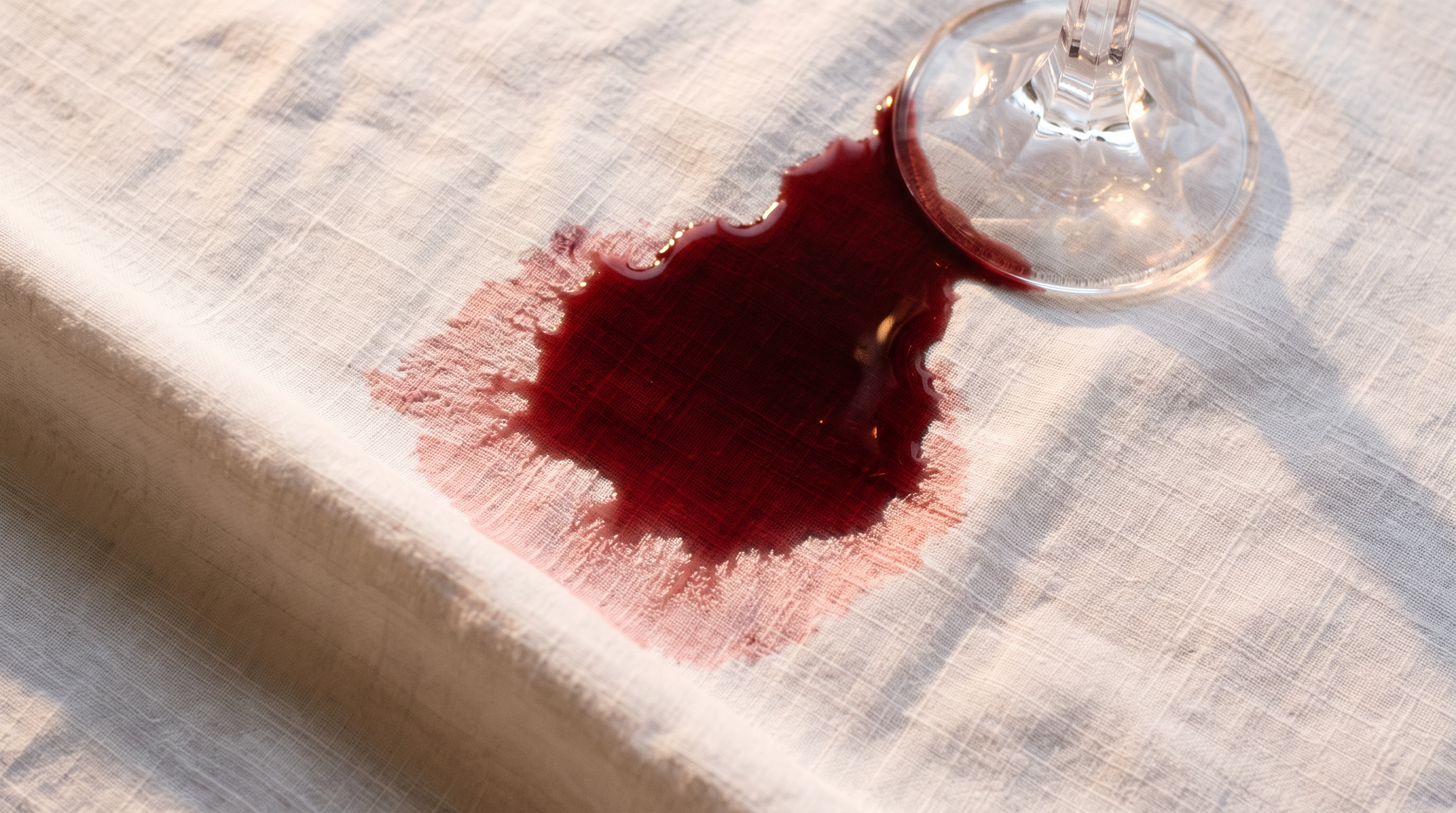
Bar soap and some alkaline products can react with tannins and set the colour, particularly on a fresh mark. The old advice to rub soap into a wine stain is one of the more reliably counterproductive pieces of household folklore. Water first, in quantity. Chemistry second, and the right chemistry.
Tannin is a dye. You are not cleaning it off — you are trying to take its colour away.
The method
How do you remove a fresh tannin stain?
- Blot up the liquid with a clean cloth. Do not rub — rubbing spreads the dye across more fibres.
- Flush from the back with a large volume of cool water. Volume matters more than pressure or temperature. Hold the reverse of the fabric under a running tap so the stain is pushed back out the way it came.
- Soak in cool water for 30 minutes if the mark is still visible.
- Treat with oxygen bleach — sodium percarbonate — dissolved per its instructions, for 1 to 6 hours. This is the step that removes the colour.
- Wash normally at the temperature the care label allows, then check dry.
Does salt work on red wine?
Slightly, and not for the reason people think. Salt is mildly hygroscopic, so a thick layer on a fresh spill draws some liquid up out of the fabric before it can bond. It does nothing to dye that has already attached, and on some fabrics it leaves a ring. If a tap is within reach, cool water in volume beats salt every time.
By drink and by fabric
| Stain | First move | Then | Watch for |
|---|---|---|---|
| Black tea | Cool flush from the back | Oxygen bleach soak, warm | Milk adds a protein and fat component |
| Coffee | Cool flush | Oxygen bleach soak | Same — milk and sugar change the mix |
| Red wine | Blot, then heavy cool flush | Oxygen bleach soak, 1 to 6 hours | Do not use bar soap on the fresh mark |
| White wine and clear juice | Rinse even though it looks clean | Normal wash | Invisible now, brown in 6 weeks |
| Berries | Cool flush | Oxygen bleach | Heat sets berry pigment quickly |
Swipe to see the full table
Are tannin stains safe to treat on wool and silk?
With care, and without oxygen bleach. Sodium percarbonate attacks protein fibres as well as dye, so it should not be used on wool, silk or cashmere. Flush with cool water, use a dedicated wool wash, blot rather than soak, and take anything valuable to a specialist. Enzymes are also out — though they were never the right tool for tannin anyway.
Element's sheets are biological, and on this category that matters mostly as a piece of honesty: enzymes are not the mechanism for tannin. A protease will do very little to a red wine mark. Oxygen bleach is the tool, and we do not sell one.
What the sheets are for is the wash that comes after the treatment — a full dose, in the drum, at the temperature the care label allows, to clear the loosened dye and the treatment residue together.
We would rather tell you which step our product is not for than let you assume it does everything.
The full stain guideKeep reading
Written and fact-checked by the Element for Men editorial team. General guidance only — always follow the care label on the garment.