The Washing Machine Dial, Decoded
Short answer: cottons at 40°C, synthetics at 30°C, towels and bedding at 60°C. Every programme on the dial is a preset of four things — temperature, tumble rhythm, spin speed and rinse count. The fabric names tell you which combination that fabric can take.
Written by Element for Men · 23 August 2026
The dial is the least-read instrument in the house. Most people find one setting that works and never move it again. That is not unreasonable, but it costs you time, electricity and the lifespan of half your wardrobe.
What do the settings on a washing machine dial actually mean?
The dial looks like a list of fabrics. It is really a list of presets. Behind every name — Cottons, Synthetics, Delicates, Quick, Eco — the machine is setting four variables, and nothing else:
- Temperature. The ceiling the water is heated to: 30, 40, 60, occasionally 90°C.
- Tumble rhythm. How long the drum turns and how long it pauses. Cottons tumble almost continuously. Synthetics and wool get short turns and long rests.
- Spin speed. Anywhere from 400 to 1600 rpm.
- Rinse count. Usually two or three. Quick programmes cut it to one.
Change the programme and all four move together. That is the entire mechanism. Once you know which of the four a garment actually cares about, the dial stops being a mystery and becomes a set of trade-offs.
Which cycle should I use for everyday clothes?
Cottons at 40°C. Shirts, t-shirts, jeans, socks, mixed lights, mixed darks. Continuous tumble, two or three rinses, high spin. On a modern machine it will take two to two and a half hours, which surprises people who remember shorter washes — the reason is in the eco section below.
If the load is mostly man-made — technical shirts, sports tops, fleece, anything stretchy — move to synthetics instead.
What does the synthetics cycle do differently?
Three things. A lower temperature ceiling, usually 40°C and often run at 30. A gentler, intermittent tumble. And a lower spin, typically 800 to 1200 rpm. Many machines also use more water on this programme.
The reason is the fibre. Polyester creases hard under heat and mechanical stress, and it holds body oils in a way cotton does not — which is why gym kit smells and a cotton shirt does not. Slower and cooler protects the fabric, but it also cleans less aggressively, so with sportswear the answer is a correct dose rather than a hotter wash. That is covered properly in what actually works on gym kit.
What temperature should I wash clothes at?
Three settings cover almost everything.
- 30°C — everyday clothes worn once, and anything dark you want to keep dark. Modern detergents are formulated to work at this temperature.
- 40°C — cottons and mixed loads, and anything visibly worn rather than merely worn.
- 60°C — towels, bed linen, tea towels, heavily soiled cotton workwear. Hot enough to shift the body oils and residues that colder washes leave in the fibre, which is where stubborn odour lives.
One thing worth knowing: heating the water is where most of a wash's electricity goes. The motor costs very little by comparison. So the temperature you select, not the length of the programme, is the figure that moves your bill.
The limitation. Washing everything at 30°C indefinitely is the most common reason a machine develops a smell of its own. Residue and oils build up in the drum and the seal at low temperatures. One 60°C load a week — towels or bedding — keeps that in check.
What spin speed should I use?
The spin decides how wet the load comes out, and it is the setting almost nobody touches.
- 1400–1600 rpm — towels, bedding, denim, anything heading for a tumble dryer or a line.
- 800–1200 rpm — shirts, synthetics, anything you would rather not iron. Faster spin means deeper creases.
- 400–600 rpm, or off — wool, knitwear, anything structured or delicate.
Every step up removes more water and shortens drying time, which matters if you dry indoors. It also puts more stress on seams and elastic. Choose by what happens to the load after the wash, not by the fabric alone.
Does a quick wash actually clean clothes?
Yes, within limits. A 15 to 30 minute quick programme is a real wash. It simply has less of everything: a lower temperature, a short tumble and usually a single rinse.
Cleaning is a trade between four things — time, temperature, mechanical action and chemistry. A quick wash cuts two of them, so the other two have to carry the load.
It works for half a drum of lightly worn clothes, one day's wear, nothing visibly marked. It does not work for towels, bedding, gym kit, anything stained, or a full drum. With one rinse and a packed drum you get detergent back out in the fabric, and that residue is its own odour problem.
Why does the eco programme take three hours?
Because it trades temperature for time. Eco heats the water less, tumbles for considerably longer, and uses less water throughout. Extended contact at a lower temperature does the work the heat would otherwise have done — and the heat is the expensive part.
It is also the programme the energy label is measured on, which is why it is usually the slowest setting on the dial and why the whole machine seems to have got slower over the last decade. It has not got worse. It has been optimised for a different number.
Use it for everyday loads you are not waiting on. Do not use it for a load that is heavily soiled or already smells, where temperature is doing something that time cannot.
Where does everything go before you press start?
Detergent. Sheets, pods and capsules go into the empty drum, before the clothes, so they sit in the water rather than perched on top of the load. Liquid and powder go into compartment II, the large one.
Fabric conditioner. The flower compartment, up to the max line, and never the drum. It is siphoned into the final rinse after the detergent has gone, and detergent neutralises it on contact. Compartment I is prewash, which most loads never use.
The full decode is in washing machine drawer symbols, and the conditioner timing in where fabric softener goes.
What does the dial not fix?
Three things, and between them they cause more disappointing washes than any programme choice.
Overloading. Clothes have to fall through the water to be cleaned. The working rule is a hand's width of space above the load at the top of the drum. Packed tight, no setting on the dial will clean it, because the mechanical action has nowhere to happen.
Overdosing. More detergent does not clean more. It rinses out less, and what stays in the fibre stiffens the fabric and holds smell. Pre-measured formats exist for exactly this reason.
The care label beats the dial. If a label specifies 30°C, hand wash, or a maximum spin, that is the instruction. The programme name is a shortcut, not an override.
When does none of this apply?
Front-loaders only. The compartment numbering, rinse counts and spin speeds above are European front-loader conventions. Many top-loaders fill to a set level, agitate rather than tumble, and label their programmes differently.
Wool, silk and cashmere. These are protein fibres. They want the wool programme, a dedicated wool wash and a low or disabled spin, and they should not meet a biological detergent — including ours.
Sensor and auto-dose machines. If your machine weighs the load or doses itself, it is deciding some of these variables for you. The dial position matters less than what you put in the drum.
Damage already done. A set-in stain, a shrunken jumper, a bobbled knit. The dial manages a load. It does not repair one.
The short version
Cottons at 40. Synthetics at 30. Towels and bedding at 60, once a week. Spin high for towels and denim, low for shirts and knits. Quick wash for a lightly worn half-load. Eco for anything you are not waiting on. Detergent in the drum or compartment II, conditioner in the flower compartment, and never pack the drum.
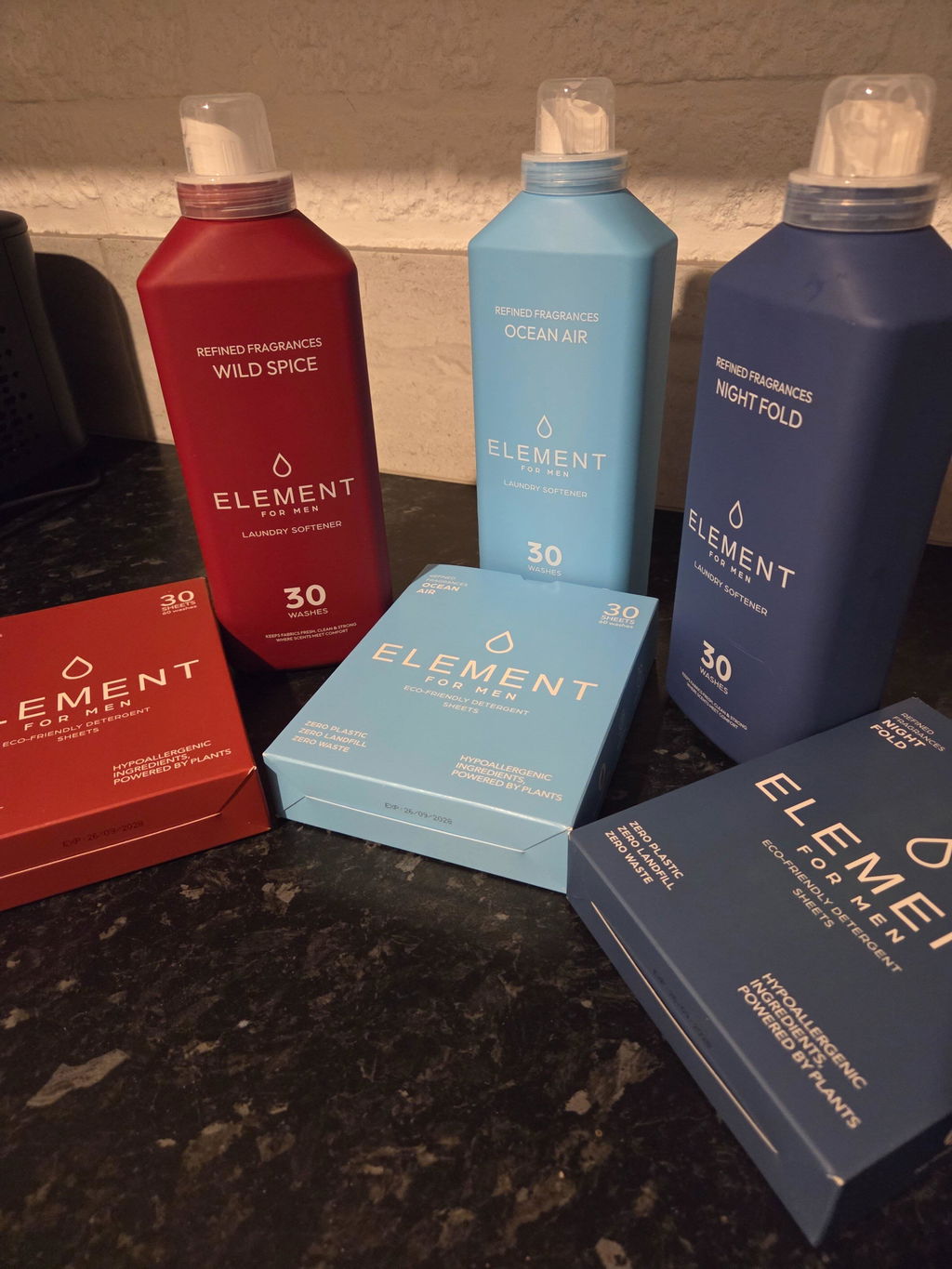
Element's detergent sheets go into the empty drum before the clothes and dissolve from 30°C, so the dose is the same whichever programme you have chosen — thirty sheets, thirty washes, up to 60 if you halve them for smaller loads. They contain enzymes, so wool, silk and cashmere want a dedicated wool wash instead.
More answers like this one: fabric and garment care, questions answered. The wider guide: laundry questions, answered.
Related reading: how to wash trainers in a washing machine · bio vs non-bio detergent.