Fabric softener and the feel of laundry
Softness is mostly misunderstood. It is largely a rinsing and water-hardness story, and only partly a softener story. Below is how it actually works — including the loads where softener is the wrong tool, ours included.
How softener works
What improves the final feel of laundry?
Three things, in order of impact. First, rinsing: detergent residue left in fibre makes fabric feel stiff and scratchy, so an extra rinse often does more than any product. Second, water hardness: calcium and magnesium deposit insoluble residue in fibre, which is why the same towel feels different in London and Glasgow. Third, fabric softener: cationic surfactant deposits a lubricating film so fibres slide past each other. Softener is the one people reach for first, and it is the third-biggest lever.
What does fabric softener actually do?
Fabric softener is a cationic surfactant. Fabric fibres carry a slight negative charge when wet, so the positively charged softener molecules are attracted to them and deposit a thin, waxy film. That film lubricates the fibres so they slide past each other instead of catching — which is what your hand reads as softness. It also reduces static and carries fragrance.
Is fabric softener the same as fabric conditioner?
Yes. Two names for the same product category. UK brands tend to say conditioner, US brands tend to say softener. The chemistry is identical: a cationic surfactant delivered in the final rinse.
Why does fabric softener reduce static?
Static builds when synthetic fibres rub together and exchange electrons, leaving a charge with nowhere to go — especially in dry indoor air. Softener leaves a mildly conductive, lubricating film that reduces the friction generating the charge and lets it dissipate rather than accumulate.
Does fabric softener make ironing easier?
Yes, marginally. The lubricating film lets fibres move more freely, so creases fall out with less resistance and the iron glides. It is a real but modest effect. Removing the garment from the machine promptly and hanging it while damp does considerably more.
How much fabric softener should I use?
Follow the cap markings for your load size and water hardness, and err low. Softener works by deposition: once fibres are coated, extra product has nowhere to go and simply builds up in the fabric and the machine.
Can you use too much fabric softener?
Yes — the most common mistake in the category. Over-dosed fabric eventually feels waxy rather than soft, absorbs less, and holds odour. More softener does not mean more softness or more scent.
Does fabric softener expire?
It separates before it expires. Stored a long time, or through freezing temperatures, the emulsion can split and the product thickens or goes lumpy. Shake it. If it will not re-emulsify, it will not dose evenly.
Where softener is the wrong tool
Should you use fabric softener on gym clothes?
No. Performance fabrics wick sweat through engineered capillary channels in the fibre. Softener deposits a hydrophobic film that blocks those channels, so the fabric stops moving moisture and starts holding sweat and oils against the skin. It accumulates. Nike, Patagonia and Under Armour all advise against softener in their care instructions. Use it on cotton, shirts, bedding and denim instead.
I already used softener on my activewear — have I ruined it?
No. The residue is removable. Run a hot wash appropriate to the care label with no softener, ideally with an enzyme detergent and an extra rinse, and repeat if needed. Wicking recovers as the film comes off. Then keep softener away from that pile permanently.
Why do my towels stop absorbing water?
Almost always fabric softener. A towel works by absorbing water; softener coats the cotton in a water-repellent film — the exact opposite of what a towel is for. Stop using softener on towels, run a hot wash with no product to strip the build-up, and absorbency returns over a few washes.
Can you use fabric softener on microfibre?
No. Microfibre cleans by static attraction and capillary action across an enormous surface area. Softener coats that surface and kills both mechanisms. A softened microfibre cloth smears instead of lifting.
Can you use fabric softener on waterproofs?
No. Technical outerwear relies on a durable water repellent finish and, in breathable shells, on moisture vapour passing through a membrane. Softener coats both. Wash technical shells with a dedicated technical cleaner and no softener.
Can you use fabric softener on wool?
You can, but you rarely should. Wool is naturally soft when it has not been felted; stiffness usually means it has been agitated or washed too warm. Use a dedicated wool detergent and a wool cycle. Fixing the wash beats coating the fibre.
Can you use fabric softener on flame-retardant fabrics?
No — this one matters. Softener can coat flame-retardant treatments and compromise their performance, which is why children's sleepwear and FR-treated workwear carry explicit instructions against it. Follow the garment label without exception.
Can you use fabric softener on down jackets?
No. Down insulates by loft — the air trapped between clusters. Softener coats the down, causes clumping and collapses loft, taking the warmth with it. Use a down-specific wash and tumble with dryer balls to restore loft.
Does fabric softener damage clothes over time?
It does not destroy fibre, but the film accumulates and changes how fabric behaves — reduced absorbency, reduced wicking, a waxy hand, and better odour retention. It is a build-up problem, not a destruction problem, and it is reversible with a stripping or enzyme wash.
Dosing and machines
Where does fabric softener go in a washing machine?
In the dedicated softener compartment, usually marked with a flower symbol and typically the middle section on a UK front-loader. It must not go in with the detergent: softener is cationic, detergent is anionic, and together they neutralise each other, so you lose both. The machine releases softener during the final rinse for exactly that reason.
Can you use fabric softener and detergent together?
Yes, in the same wash — never in the same compartment. Detergent in the main wash compartment, softener in the softener compartment. The machine adds softener at the final rinse, once the detergent has been rinsed away.
Why is there softener left in the drawer after the cycle?
Usually a blocked or scaled siphon in the dispenser, or product too thick to siphon cleanly. Pull the drawer out, remove the softener insert, and rinse both under a hot tap. In hard-water areas this needs doing regularly — limescale narrows the siphon until it stops working.
Can you put fabric softener straight into the drum?
Not with the detergent — it would be neutralised on contact. If your dispenser is broken you can add diluted softener manually at the start of the final rinse, but it is fiddly. Fixing the drawer is the better answer.
Is fabric softener bad for your washing machine?
Not inherently, but it contributes. Residue combines with low-temperature washing to build biofilm in the drum, drawer and door seal — a common source of the musty smell people blame on the machine. Dose correctly, and run an empty maintenance wash at 60°C or above monthly.
Does fabric softener work in a cold wash?
Yes. Softener deposits in the final rinse, and that mechanism is not temperature-dependent in the way detergency is. Cold rinsing is fine for softener — it is the wash stage where temperature matters.
Why does my fabric softener not smell strong?
Usually over-loading, under-rinsing, or dosing into the wrong compartment. A packed drum means fabric never moves freely through the rinse, so deposition is patchy. Fill the drum to about three-quarters, and check the softener is going into the softener compartment.
Alternatives and myths
What can I use instead of fabric softener?
Run an extra rinse — most stiffness is detergent residue, not a lack of softener, and hard-water areas need more rinsing. White vinegar in the softener drawer dissolves residue and limescale without depositing film, though it adds no scent. Wool dryer balls reduce static and drying time. For activewear, a good rinse is all you need.
Does white vinegar actually work as a softener?
It works, but not as a softener. Vinegar does not deposit a softening film; it is a mild acid that helps dissolve alkaline detergent residue and limescale, so fabric feels softer because there is less residue in it. Useful in hard-water areas. It adds no scent, and it does not smell of vinegar once dry.
Do dryer balls replace fabric softener?
Partly. Wool dryer balls separate the load so air circulates, cutting drying time and reducing static and creasing through mechanical action. They do not deposit a lubricating film, so they do not soften the way a conditioner does. Different mechanism, overlapping outcome.
Do dryer sheets do the same thing as fabric softener?
Similar chemistry, different delivery. Dryer sheets transfer a softening, anti-static coating using dryer heat rather than the rinse. Same trade-offs: same build-up, same problems on towels and activewear. In the UK, where many households air-dry, they are far less relevant.
Does fabric softener stop clothes smelling?
It adds fragrance; it does not address the cause. Odour comes from sebum and soil left in the fibre after the wash. Softener sits on top and perfumes it — which is why a garment can smell good from the cupboard and turn the moment it is warm or damp. Fix the wash first, then use softener for feel and scent.
Is fabric softener necessary at all?
No. It is a preference product, not a cleaning one. It changes how fabric feels and smells; it does nothing for how clean it is. Plenty of people rinse well and never use it. It earns its place on cotton, shirts, bedding, loungewear and denim — and should stay away from towels, activewear and technical kit.
Why does the same softener feel different in different parts of the UK?
Water hardness. In hard-water areas — chalk and limestone geology, so much of London, the South East, East Anglia and parts of the Midlands — calcium and magnesium leave insoluble residue in fibre that no amount of softener overcomes. In soft-water areas over granite, fabric feels softer with less product. Your water company publishes your postcode's hardness; it is worth knowing.
Element fabric softener
What fabric softener does Element make?
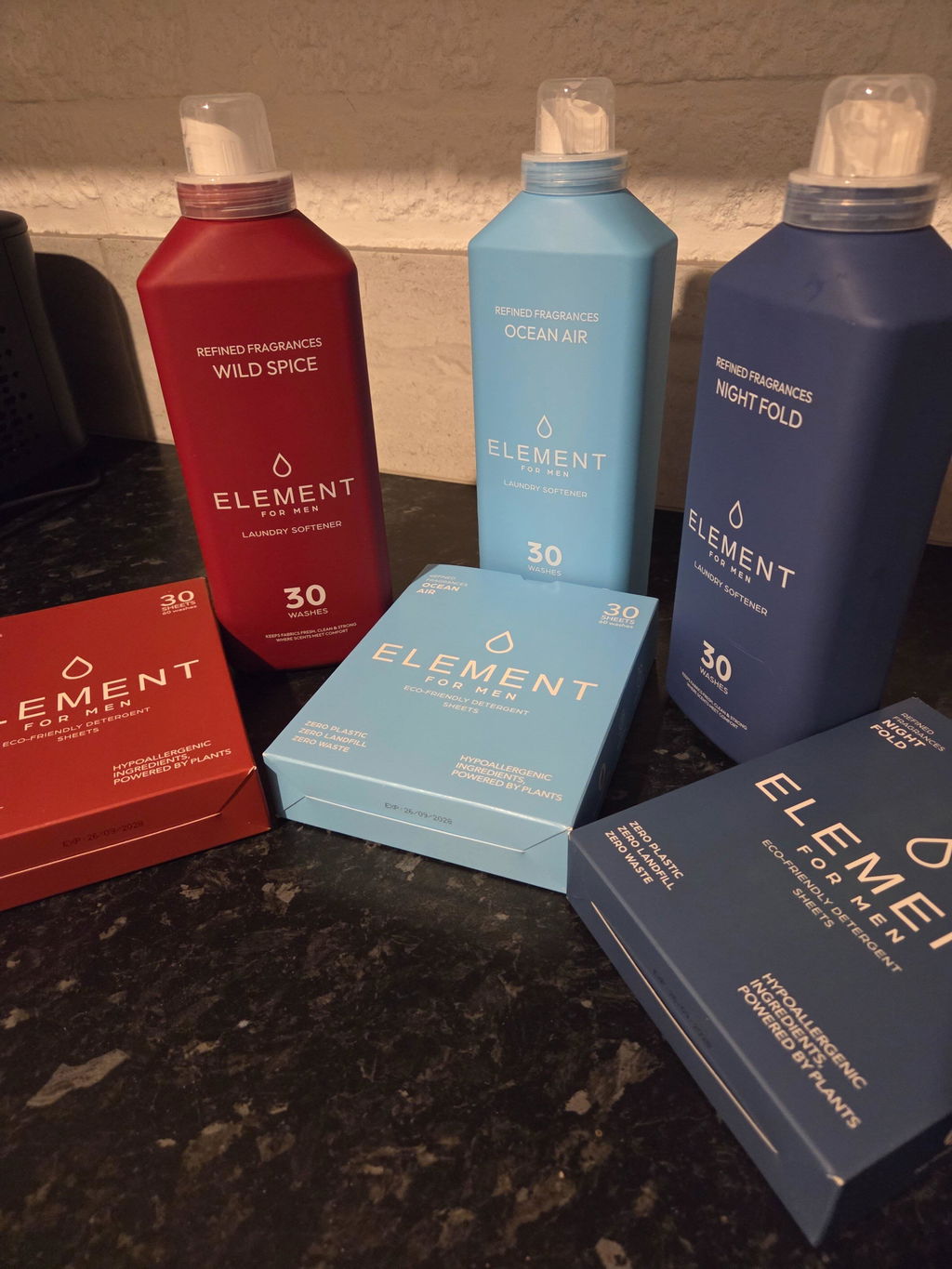
A 1L fabric softener at £7.99, in each of our three fragrances — Wild Spice, Night Fold and Ocean Air. A minimum of 30 washes per bottle. It is designed to match the detergent sheet in the same scent, so the fragrance layers rather than fights.
Should I use Element softener on my gym kit?
No — and we would rather say so. Ours is a cationic softener like any other, and the mechanism that makes cotton feel good is the mechanism that blocks wicking in performance fabric. Use it on shirts, bedding, cotton, loungewear and denim. Keep it away from activewear and towels.
Can I use Element softener with another brand's detergent?
Yes. Softener and detergent are separate stages and there is no compatibility issue. You will get the cleanest version of the scent by matching it with the same-scent Element sheet, but nothing breaks if you do not.
What is in an Element bundle?
Detergent sheets plus the matching fabric softener in the same scent, at £14.99. The Rotation Bundle at £19.99 is one box of 30 sheets plus two 1L bottles of the matching softener, in a single scent. Free UK delivery on orders of £35 or more; subscribers get 10% off plus free delivery.
Related: all laundry questions answered · shop fabric softener