How to Wash a Duvet at Home (and When Not To)
Most duvets can be washed at home, but only if the drum is big enough: 7kg for a single, 9kg or more for a king. Wash at 60°C where the label allows, then dry it completely, which takes hours.
Measure your drum before you do anything else. A duvet needs room to tumble, not just room to fit. If it fills the drum when dry, it will sit there sodden and unwashed when wet — and the load that comes out will be worse than the one that went in.
Can you wash a duvet in a washing machine at home?
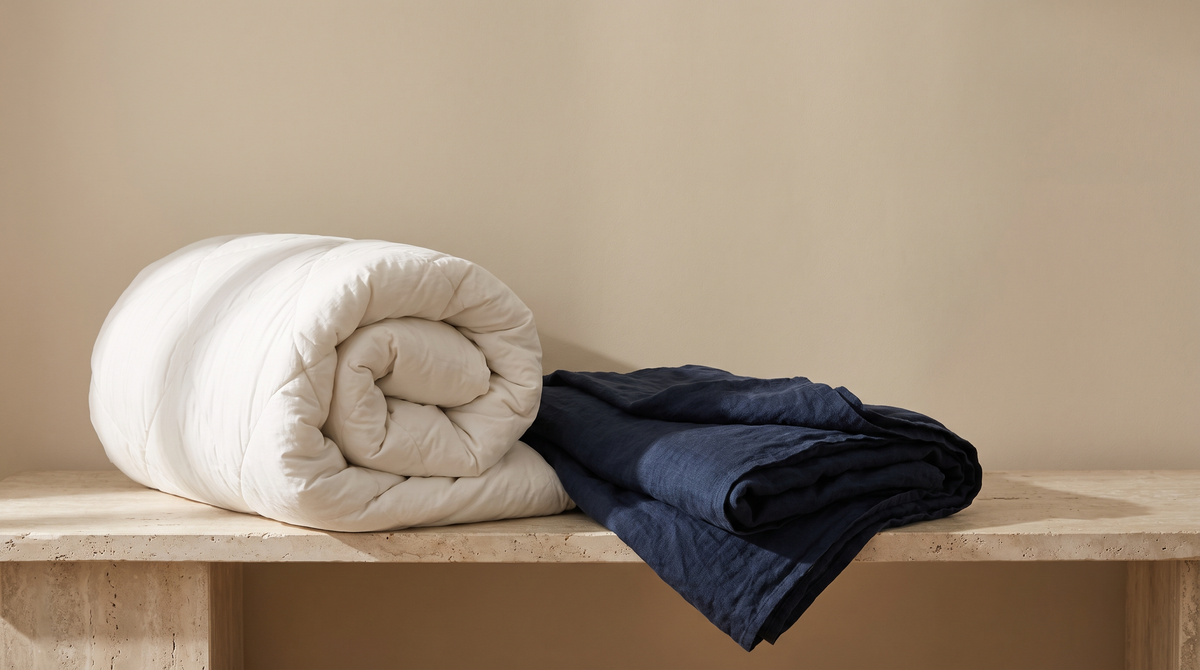
Usually, yes. A duvet is a quilted bag of fibre, and if the filling tolerates water then the duvet does. The constraint is almost never the fabric. It is the machine.
Washing depends on mechanical action — fabric moving against fabric and against water. A duvet packed tight into a drum cannot move, so water never reaches the middle of it. You get a wet duvet rather than a clean one, and a machine working far outside what its bearings allow.
What size drum do you need to wash a duvet?
Roughly double the dry weight of the duvet, because wet filling weighs several times more than dry filling and still needs room to fall. A single wants a 7kg drum, a double 8kg to 9kg, and a king 10kg or more. The test that beats any table: roll the duvet loosely, push it into the dry drum, and see whether you can still fit both forearms in beside it. If you can, you have room. If it wedges, you do not.
| Duvet | Minimum drum | If your machine is smaller |
|---|---|---|
| Single, 4.5 tog | 7kg | Usually fine in a 7kg drum |
| Double, 10.5 tog | 8kg to 9kg | Launderette |
| King or super king | 10kg and up | Launderette, every time |
| Any duvet, 13.5 tog | Add 1kg to the above | Launderette |
Scroll to see the full table
What temperature should you wash a duvet at?
60°C for synthetic and hollowfibre duvets where the label allows it. 30°C on a gentle cycle for down and feather.
60°C is worth the electricity here in a way it rarely is for a shirt. A duvet spends every night collecting body oil — the same soil that yellows a collar — and oil needs heat to lift rather than move around. This is one of the few loads where the hotter wash does a genuinely different job.
Use the slowest spin the machine offers. A hard spin drives the filling into the corners and seams, and it does not come back out.
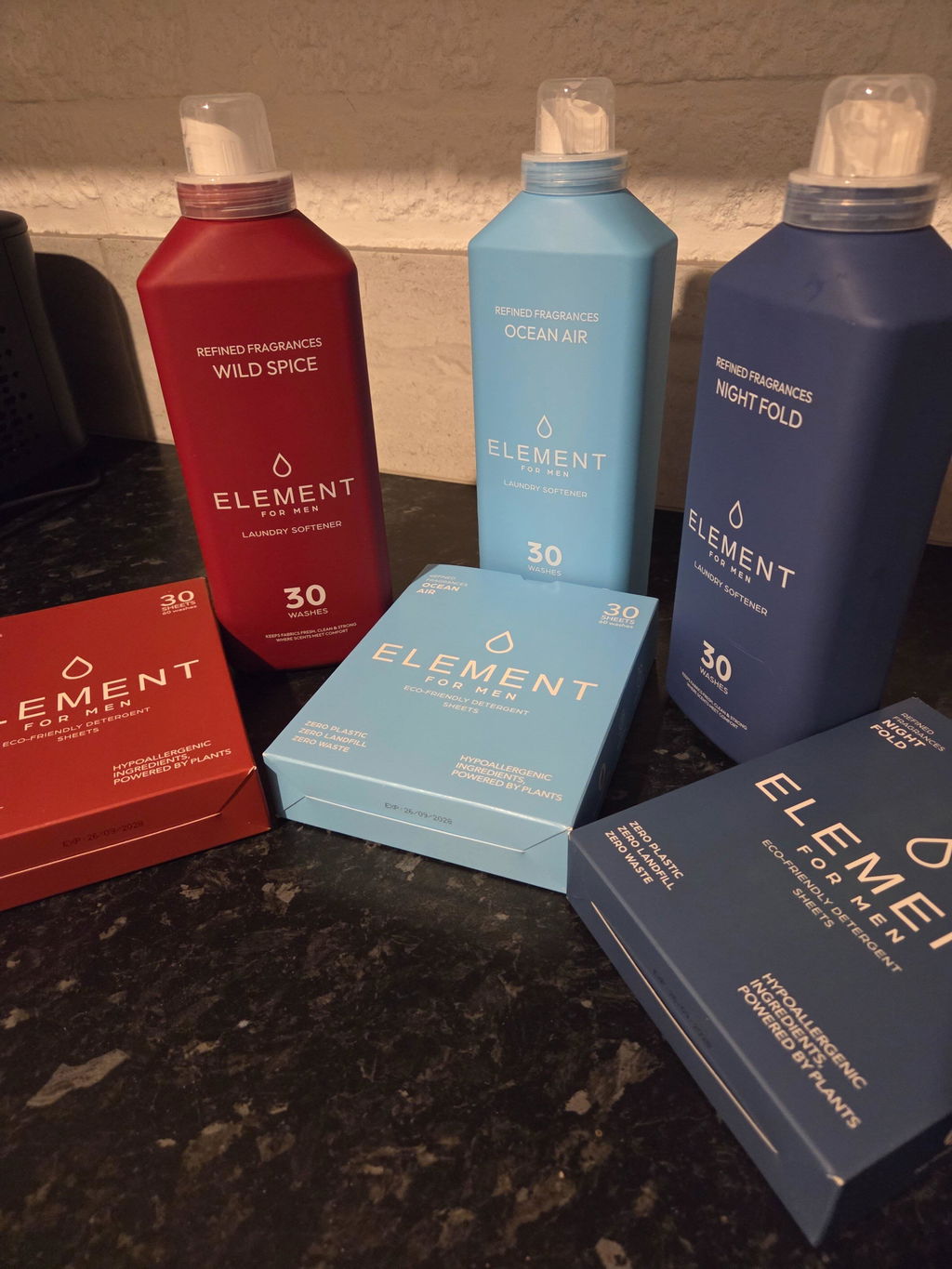
Down and feather are protein. A biological detergent contains enzymes that break down protein, so an enzyme detergent — ours included — is the wrong product for a down duvet. Use a dedicated down or wool wash. That caveat applies to every biological detergent on the shelf, not only to Element.
How much detergent should you use on a duvet?
About half what the same weight of clothing would take, and this is the instruction people get wrong most often.
Water enters a duvet slowly and leaves it slowly. Detergent that would rinse cleanly out of a t-shirt stays in the wadding, which is why a freshly washed duvet can come back stiff, faintly grey and smelling of damp within a fortnight. Suds are not evidence of cleaning. They are residue with nowhere to go.
Add an extra rinse. It reliably earns its extra 15 minutes on this load. If your machine has none, run a second short cycle with no detergent at all.
Nobody ruins a duvet in the wash. They ruin it in the drying.
How do you dry a duvet properly?
Slowly, on low heat, and for far longer than feels reasonable. A duvet that is dry to the touch can hold a wet core for days, and a wet core is where musty smells begin.
- Tumble dry on low. High heat melts synthetic wadding and cooks feather.
- Add 3 clean dryer balls to break up clumps while they are still soft.
- Stop every 30 minutes, pull the duvet out, and shake the filling back across the baffles by hand.
- Expect 3 to 4 hours for a double. Air drying alone almost never finishes a duvet in a British September.
- Before it goes back on the bed, press the middle of each baffle. Coolness or weight means it is still wet.
How often should you wash a duvet?
Once or twice a year, with a washable cover doing the weekly work. The cover catches most of it. The duvet collects what gets through, mostly body oil, which is why an unwashed duvet eventually smells of something no amount of clean bedding hides.
And the limitation worth stating plainly: washing does not restore loft. If the filling has migrated permanently to the ends of the baffles, or the duvet has gone thin and papery in the middle, the fibre has broken down. A wash will make it clean. It will not make it warm again.
For a synthetic duvet this is an ordinary bedding wash, and Element does the ordinary job — 1 sheet in the empty drum before the duvet, 60°C, slow spin, extra rinse. Halve the sheet if the drum is only half full.
For down and feather, use a dedicated down wash instead. Our sheets are biological and down is protein. We would rather say so than sell you the wrong thing.
See the detergent sheetsKeep reading
Written and fact-checked by the Element for Men editorial team. General guidance only — always follow the care label on the duvet.