How to Wash a Cap Without Ruining the Brim
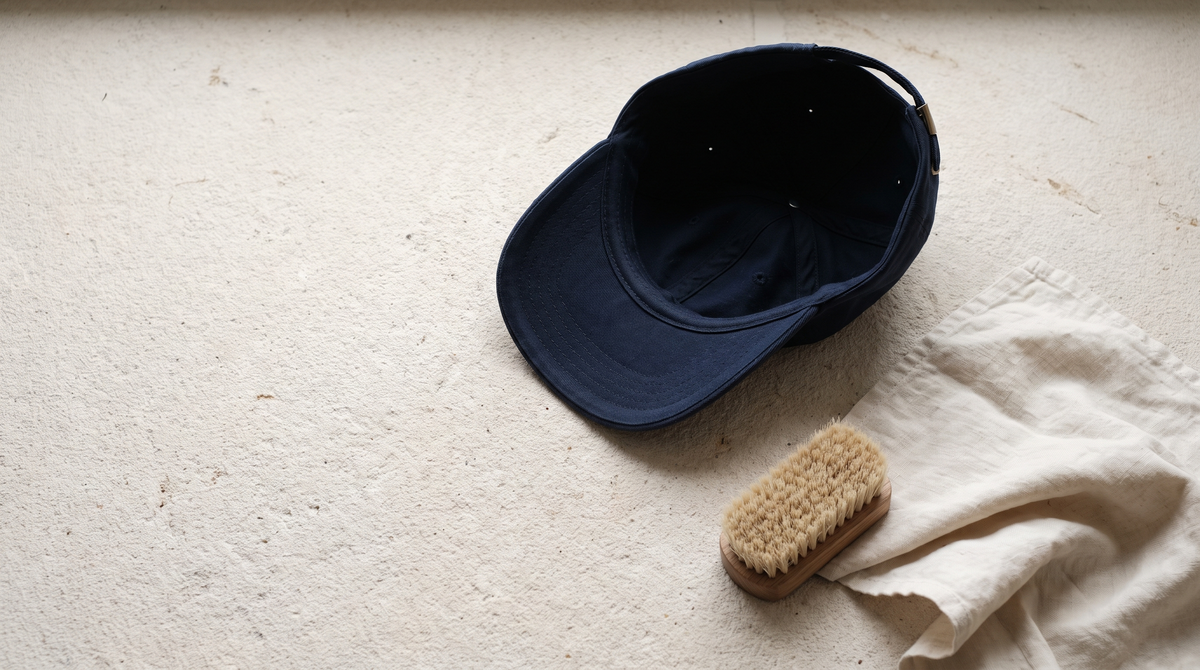
Wash a cap by hand in cool water with a soft brush. Not in the machine, not in the dishwasher. The brim is what fails: modern caps carry a plastic insert that warps, older ones a cardboard one that collapses.
Find out what the brim is made of before you get it wet. Press the edge between thumb and finger. A plastic insert flexes and springs back. Cardboard feels stiff, dull and dead — and cardboard is the one that never recovers.
Can you put a baseball cap in the washing machine?
You can. It is the most common way caps are ruined.
The crown is usually cotton twill and survives it. The brim does not. A drum applies heat and sustained mechanical force at once, and a curved plastic insert held under that for 40 minutes comes out with a permanent kink in it. There is no second wash that straightens it.
The sweatband is the other casualty. It is often a different fibre from the crown, frequently with a fusible backing, and shrinks at a different rate. That is why a machine-washed cap comes back a size smaller at the front and loose at the back.
Can you wash a cap in the dishwasher?
No. This is an internet trick that made sense once and has not for 30 years.
It circulated when caps had cardboard brims and dishwashers ran cooler, and even then it worked badly. A modern dishwasher runs a drying cycle with a heating element, which is exactly the condition a plastic brim deforms under. Dishwasher tablets also carry bleaching agents that are not selective about dye, so a navy cap can come out several shades lighter on a single panel.
The crown almost never fails. Everything that goes wrong with a cap goes wrong at the brim or the band.
How do you wash a cap by hand?
In a basin, in about 15 minutes of attention.
- Fill a basin with cool to lukewarm water — hand-comfortable, no warmer.
- Add a little mild detergent and stir until the water is clear again.
- Submerge the crown only. Keep the brim above the waterline where you can.
- Work the sweatband with a soft toothbrush, in one direction, following the weave rather than scrubbing in circles.
- Leave it 20 to 30 minutes. Most of the work is dwell time, not pressure.
- Rinse in cool water until no foam comes out, then press — never wring — between 2 towels.
Wool caps are a different job. Wool is a protein fibre and a biological detergent contains enzymes that break protein down, so an enzyme detergent — ours included — is the wrong product for wool. Use a dedicated wool wash, cool water, and no rubbing at all. The same applies to a cap with a leather sweatband, which should be spot-cleaned and never submerged.
How do you get sweat marks out of a cap brim?
Slowly, and with the right expectation of what that mark is.
The pale crust is salt and rinses out easily. The brown halo underneath is not sweat at all. It is body oil that has oxidised on the fabric — the same reaction that browns a cut apple, and the same one that yellows a shirt collar. It builds over months, which is why it only appears on caps people actually wear.
Oxidised oil needs time rather than force. Work detergent into the mark with a fingertip, leave it 30 minutes before the main soak, and repeat over 2 or 3 washes rather than attacking it in one go. Scrubbing hard removes the twill's surface finish and leaves a shiny patch more obvious than the stain was.
How do you dry a cap without losing its shape?
On something head-shaped, in the air, and away from heat. An upturned bowl or a tightly folded towel holds the crown open while it dries, and that is what sets the shape. A radiator shrinks the sweatband, a tumble dryer warps the brim, and direct sunlight fades dyed cotton unevenly across the panels.
| Method | Verdict | Why |
|---|---|---|
| Over an upturned bowl or a folded towel | Best | Holds the crown open while it dries into shape |
| On a radiator | No | Shrinks the sweatband and sets the crown flat |
| Tumble dryer | No | Heat plus tumbling is the brim-warping combination |
| Direct sunlight | No | Fades dyed cotton unevenly across the panels |
Scroll to see the full table
Allow 12 to 24 hours. A cap that feels dry at the crown can still be wet where the panels meet the band, and putting a damp cap away is how a clean one starts to smell within a week.
How often should you wash a cap?
Every 10 to 15 wears for one in regular rotation, and immediately after anything that soaked it.
And the limitation, stated plainly: none of this rescues a cap that has already been through a hot machine wash. A warped brim does not come back and a shrunken sweatband does not relax. If the brim already has a kink in it, wash it for cleanliness and accept the shape.
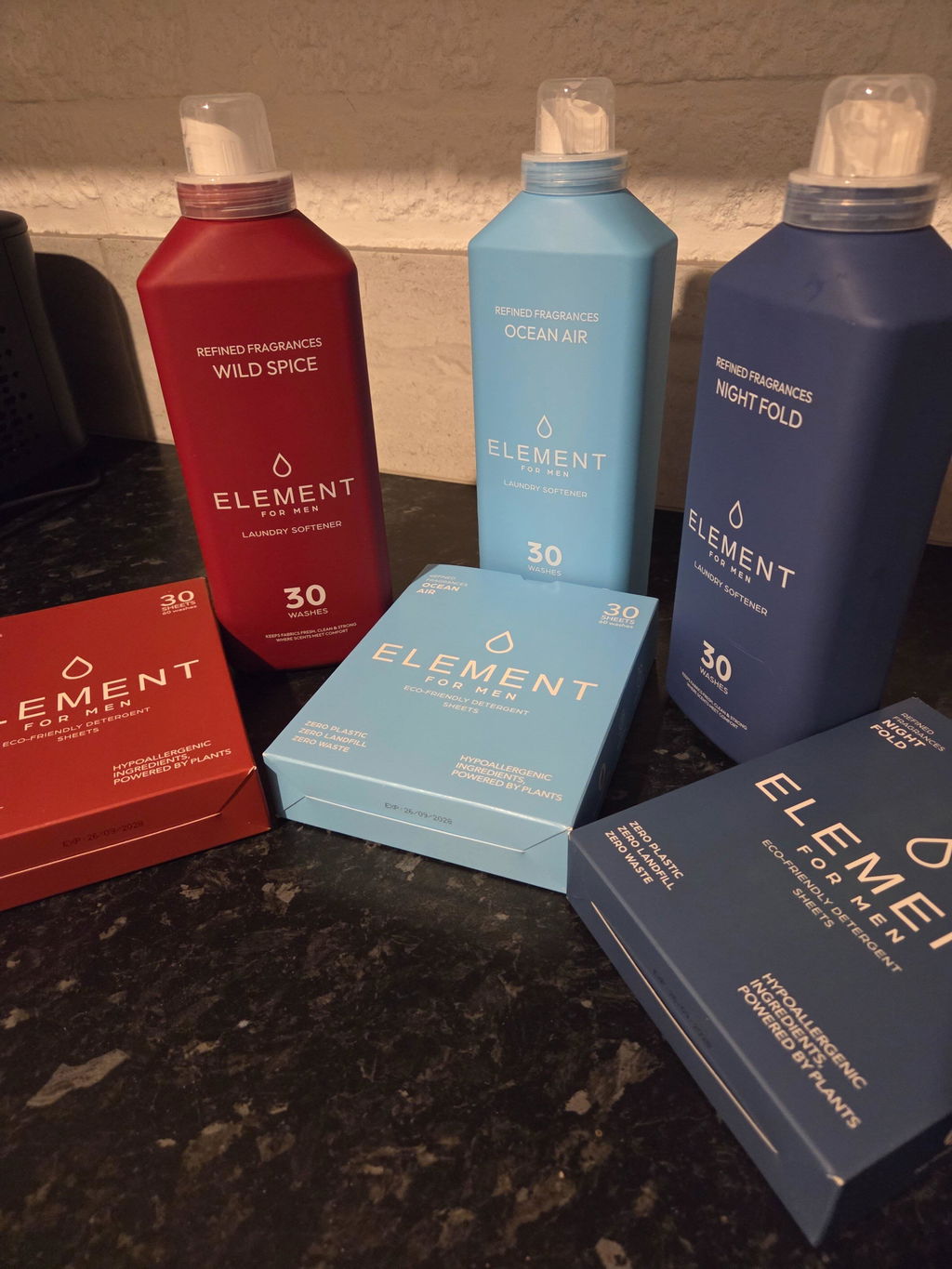
Honestly, only at the edges. A cap is a hand wash and our sheets are built for a drum from 30°C — dissolve half a sheet in the basin and stir until the water runs clear, rather than laying it against the fabric.
For a wool cap, use a dedicated wool wash instead. Our sheets are biological, and enzymes do not distinguish between a stain and a wool fibre.
See the detergent sheetsKeep reading
Written and fact-checked by the Element for Men editorial team. General guidance only — always follow the care label on the garment.